
Your cart is currently empty!
The Gateway to the Kingdom: An Exposition of Matthew 5:3
Scripture Text: Matthew 5:3 (KJV)
“Blessed are the poor in spirit: for theirs is the kingdom of heaven.”

Introduction:
The King and His Manifesto
I invite the Holy Spirit, our divine Teacher, to illuminate our understanding and soften our hearts. Remember, we are not merely reading words on a page; we are listening to the very heartbeat of our Savior.
Matthew, chapter five. Picture the scene in your mind’s eye: we are at the base of a serene mountain in Galilee. The air is crisp, the grass is lush, and before us gathers a vast multitude; people who are weary, hungry, and living under the oppressive rule of the Roman Empire. They are yearning for a King, a liberator, a revolutionary.
As Jesus ascends the mountain and takes His seat; an act that signifies authority and teaching, much like a Rabbi; we must remember that He is more than just a teacher; He is the King of Kings. Just as Moses once climbed Mount Sinai to receive the Law of the Old Covenant amid thunder and lightning, Jesus ascends this mount to deliver the “Manifesto” or “Constitution” of the New Covenant. However, there is a striking contrast: this time, the atmosphere is filled not with smoke and fire but with the gentle, compassionate voice of the Son of God.
And as He opens His mouth, the very first words that emerge are a paradox that completely upends worldly wisdom: “Blessed are the poor in spirit: for theirs is the kingdom of heaven.”

I. The Anatomy of the Verse: What it Means to be “Blessed”
Before we delve into the concept of “poverty,” we must first explore the meaning of being “blessed.” The term Jesus uses here is Makarios. In the Greek language of that era, this word described a state of divine satisfaction, often associated with the condition of the gods or those who lived in a state of heavenly favor, untouched by the ever-changing tides of earthly fortune.
When Jesus proclaims “Blessed,” He is not referring to a fleeting happiness that fluctuates based on our financial state, health, or social standing. The world may declare, “Happy are the rich, the famous, and the self-sufficient.” Yet, Jesus turns this notion on its head, instead addressing the broken-hearted, the weary, and the humble, declaring, “You are the ones who are truly favored by God.”
To be Makarios is to have the smile of God shining upon your life. It is to possess a joy that the world cannot grant and cannot take away. It is an enduring peace that comes from knowing you are reconciled with your Creator. However, let us be clear: this blessing is not a reward for our own merit; it is a gift of His unmerited grace.

II. The Depth of Poverty: The Meaning of Ptochos
Next, let us examine the challenging phrase: “the poor in spirit.” Many misinterpret this. Some believe Jesus is referring to being “poor-spirited,” implying a lack of courage or timidity. Others mistakenly think He is glorifying financial poverty. While God does indeed have a special heart for the economically disadvantaged, that is not the primary focus of this passage.
In the original language, there are two Greek words for “poor.” One is penichros, which describes an individual who works hard but has little left to his name; the “working poor.” However, Jesus employs a far more profound term: ptochos.
Ptochos derives from a root word meaning “to cower” or “to crouch.” It describes a beggar; someone who possesses absolutely nothing and must hide their face in shame while extending a trembling hand for mere crumbs of sustenance. This term conveys a state of utter, complete, and abject spiritual bankruptcy.
To be “poor in spirit” means standing before a Holy God and acknowledging your spiritual destitution. It is the realization that you have nothing to offer Him; your good works are just “filthy rags” (Isaiah 64:6; 6 But we are all as an unclean thing, and all our righteousnesses are as filthy rags; and we all do fade as a leaf; and our iniquities, like the wind, have taken us away.) in His sight. You cannot present your lineage, your education, or your religious rituals. Being poor in spirit is to approach the throne of grace and cry out, “Nothing in my hand I bring, simply to Thy cross I cling!”
This recognition is the gateway to the Kingdom. You cannot enter the door of salvation while clinging to pride. You cannot be filled with the Holy Spirit while being full of yourself. The fire of Pentecost only ignites upon the sacrifice laid bare on the altar. We must first empty ourselves of our “self-righteousness” before we can be clothed in His righteousness.

III. The Historical Echo: A Lesson from the Greats
Throughout history, great theologians have marveled at this first beatitude. Charles Spurgeon, known as the Prince of Preachers, famously stated, “the way to rise in the Kingdom is to sink in ourselves.” He understood that the lower we go in humility, the higher God lifts us through His grace.
John Wesley, the founder of Methodism, taught that this poverty of spirit represents the initial work of the Holy Spirit in a believer’s heart. Before the Spirit can comfort us, He must first convict us. He must reveal our profound need. Consider the Publican in the temple from Luke 18, who wouldn’t even lift his eyes to heaven but instead beat his chest, pleading, “God, be merciful to me, a sinner.” Jesus declared that this man went home justified. Why? Because he was poor in spirit; he recognized that he had no claim on God’s mercy except through God’s mercy itself.
In our Pentecostal tradition, we often speak of “seeking the face of God.” However, we cannot genuinely seek His face until we acknowledge our own insufficiency. The “Constitution of the Kingdom” begins here because humility is the fertile soil in which all other graces flourish. You cannot demonstrate “meekness” if you believe you are great. You cannot “hunger and thirst after righteousness” if you think you are already satisfied.

IV. The Promise: The Possession of the Kingdom
Now, focus on the promise attached to this condition: “for theirs is the kingdom of heaven.”
Notice the verb tense: Jesus does not say, “theirs will be the kingdom.” He proclaims, “theirs IS the kingdom.” This is a present-tense reality! When you reach the end of yourself and cast yourself upon the mercy of Christ, the Kingdom of Heaven becomes your immediate possession.
What does it mean to possess the Kingdom? It signifies that you are now under the rule and reign of King Jesus. His resources become your resources. His peace becomes your peace. His power becomes your power.
In the world, if you are a beggar, you are often deemed an outcast. Yet in the Kingdom of God, when you acknowledge your status as a beggar, He elevates you to princely status! He lifts the needy from the ash heap and sets them among the princes of His people (Psalm 113:7-8, 7 He raiseth up the poor out of the dust, and lifteth the needy out of the dunghill; 8 That he may set him with princes, even with the princes of his people.). This is the “Great Exchange”: we offer Him our poverty, and in return, He bestows upon us His riches. We surrender our emptiness, and He fills us with His abundance.
V. Practical Application: Living as the Poor in Spirit
How do we embody this teaching in a world that urges us to “believe in ourselves” and “take control of our destinies”?
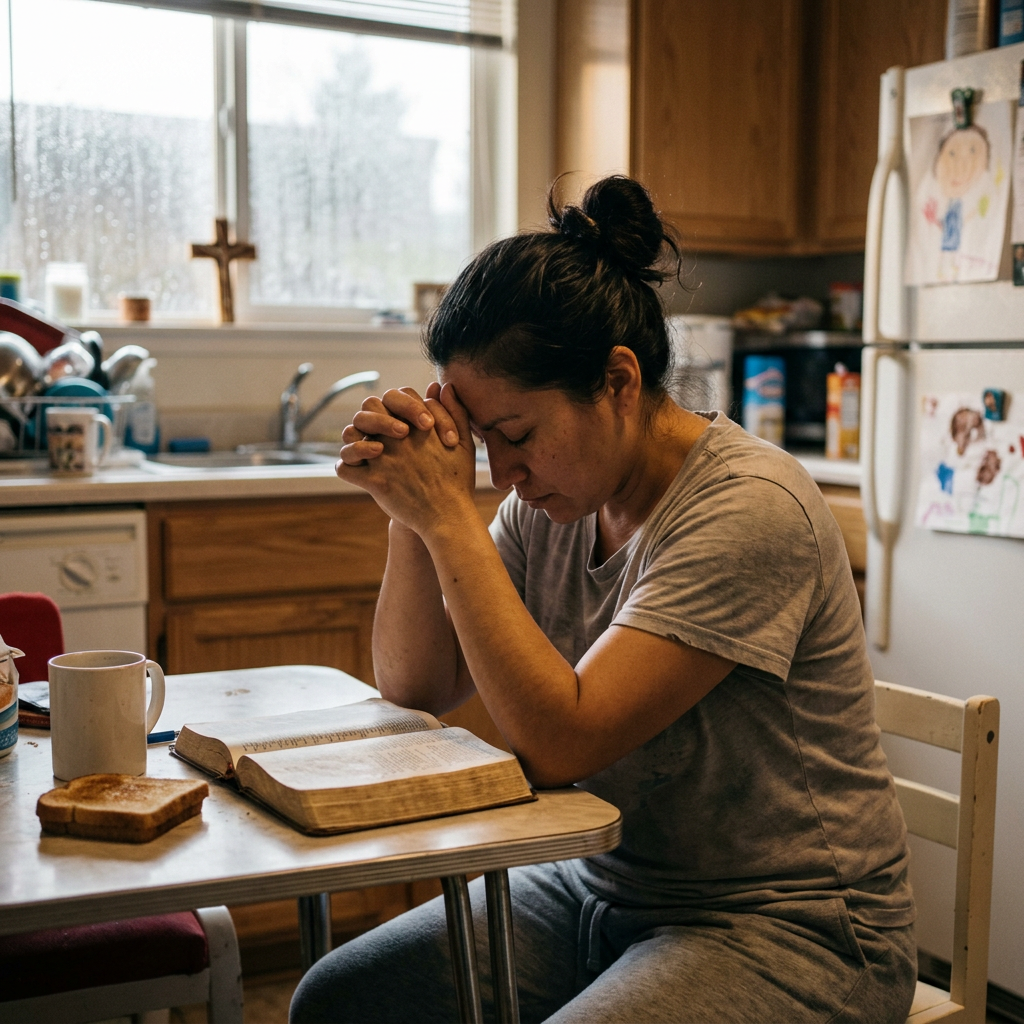
First, it necessitates Daily Dependence. Being poor in spirit is not a singular event at an altar call; it is a daily pursuit. Each morning, we should awaken with the prayer, “Lord, I cannot navigate this day without You. I cannot fulfill my roles as a spouse, a parent, or a witness for You unless Your Spirit empowers me.”
Second, it demands Teachable Hearts. A person who is poor in spirit is someone God can communicate with. They are not “know-it-alls.” Instead, they are like children at the feet of their Master, eagerly saying, “Speak, Lord, for Thy servant hears.”
Third, it fosters Compassion for Others. When you recognize that you are merely a “beggar showing other beggars where to find bread,” your judgmental spirit dissipates. You cannot look down upon someone else’s struggles when you understand that but for the grace of God, you would be in the same position. This creates a community of love where we bear one another’s burdens in recognition of our collective need for a Savior.

Conclusion: The Invitation
As I draw this message to a close, I want to speak directly to the heart that feels “empty.” Perhaps you today are feeling like a failure. Maybe your spiritual life feels parched, or you believe you have nothing left to offer God.
I bring you good news from the mouth of Jesus: You are exactly where you need to be! The Kingdom is not reserved for those “spiritual giants” who believe they have it all together. The Kingdom is meant for the broken and the contrite. The Kingdom is for the “poor in spirit.”
If you feel empty today, that simply means there is more room for the Holy Spirit to fill you. If you feel weak today, that is an indication that His strength can be made perfect in you.
Do not flee from your poverty of spirit; instead, bring it to the Cross. Allow the King of Glory to enter and dwell in the humble abode of your heart. For when you acknowledge your emptiness, you become a candidate to receive everything.
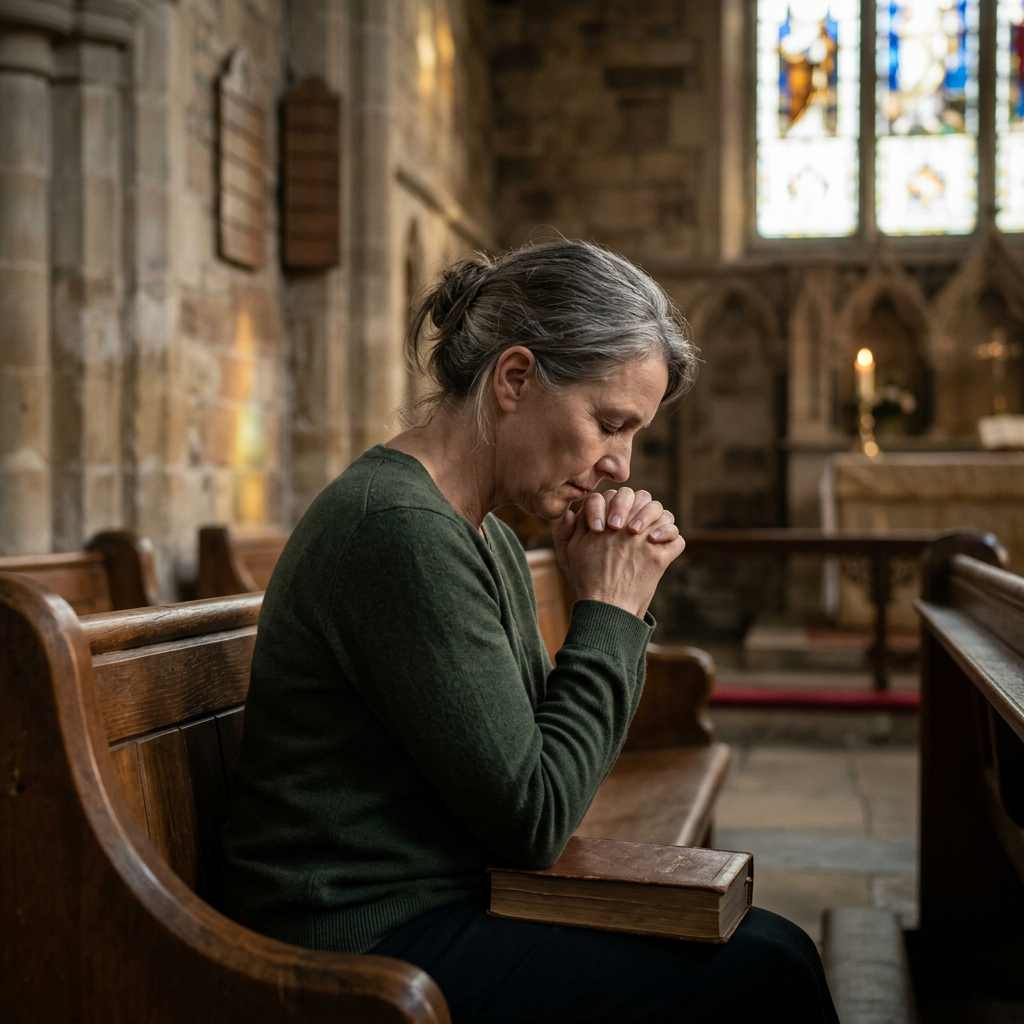
Prayer.
Heavenly Father, I thank You for Your Word. I’m grateful that You do not require me to be perfect or powerful to enter Your Kingdom. You only ask me to be honest about my need. Lord, break my pride today. Strip away my self-sufficiency. Help me to approach You as “poor in spirit,” reaching out for the richness of Your grace. Fill me with Your Spirit, and may Your Kingdom come and Your will be done in my life. In the mighty name of Jesus Christ. Amen.