
Your cart is currently empty!
Who Is Melchizedek!
In the ancient dawn of human history, when the earth was young and the voice of the Most High still echoed across the valleys and upon the hills, there lived a figure whose name would become synonymous with holiness, with peace, and with a priesthood that transcended the limitations of human lineage. His name was Melchizedek, and his story unfolds as a tapestry woven from divine encounters, acts of righteousness, cosmic power, and an abiding pursuit of the Name of God (Hashem) above all else.
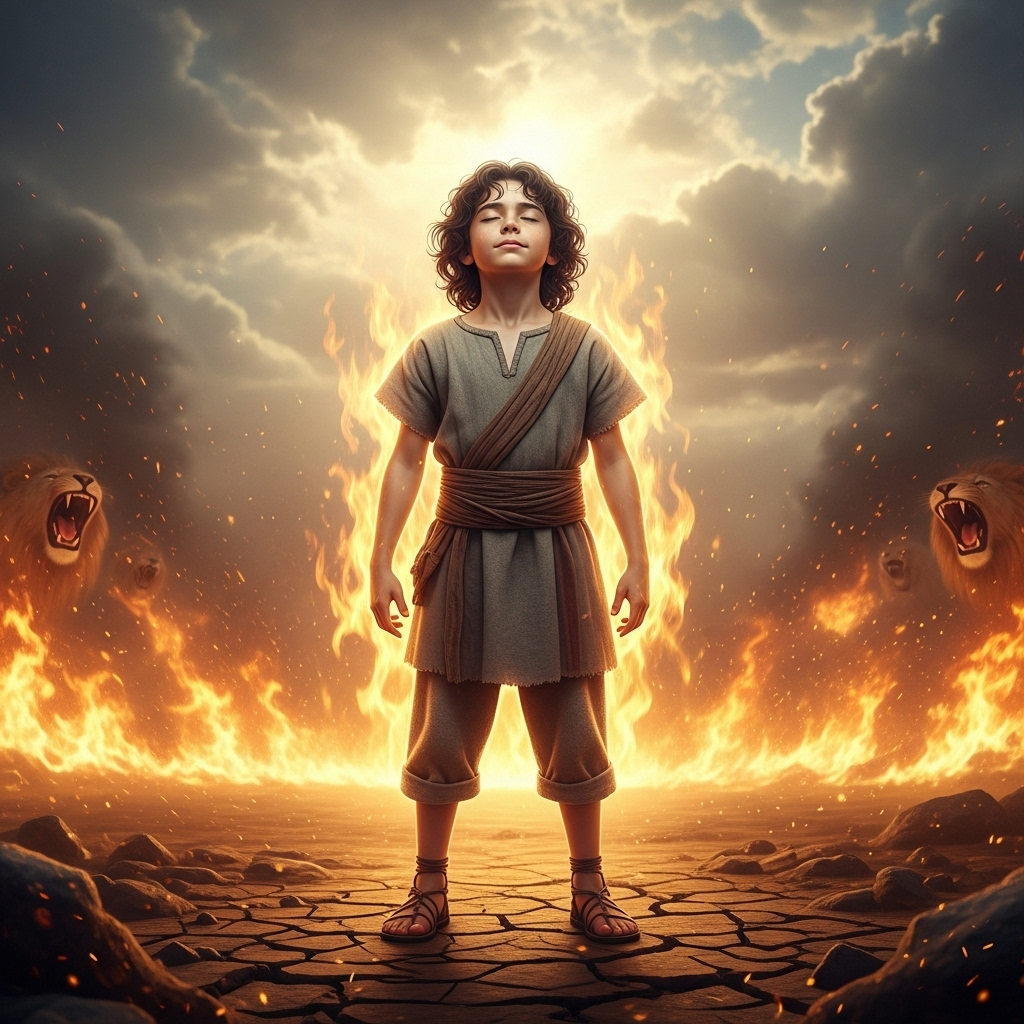
From the earliest days of his youth, Melchizedek demonstrated a depth of faith and an intensity of reverence that set him apart from those around him. Even as a child, he was given to a profound fear of YHVH Elohim, a fear that gave him strength to stand against physical dangers that would have felled the greatest of warriors. The records tell us that, as a mere lad, he “stopped the mouths of lions,” a phrase that comes to us not only as a testimony of physical deliverance but as a picture of raw, unshakable trust in the living God. Where others would have turned and fled, the youthful Melchizedek, empowered by faith, faced down these beasts and silenced them. And when a flame roared to scorch him, he walked through the fires that would have consumed the mightiest oak, extinguishing their violence as if they were streams of water. In these acts, the boy became known as one who was both righteous and powerful, a mortal vessel quickened by the Spirit of God.
It was no surprise, then, that His Majesty YHVH, having witnessed these early displays of devotion and strength, ordained him to an office that would endure beyond the confines of ordinary priesthood. Melchizedek was consecrated Kohen Gadol, High Priest, “after the order of the covenant which YHVH made with Enoch.” This ancient covenant, a bond sealed in the days before the Flood and promised by the hand of God Himself, was neither of human invention nor subject to the ebb and flow of earthly generations. It was “after the order of the Son of God,” a priesthood established “not by man, nor by the will of man, neither by father nor mother,” but by the direct purpose and will of YHVH Elohim. Through the call of the Ruach Elohim, this order, this sacred lineage of priesthood, would be delivered to all who embraced the Name, to all who believed in Hashem.
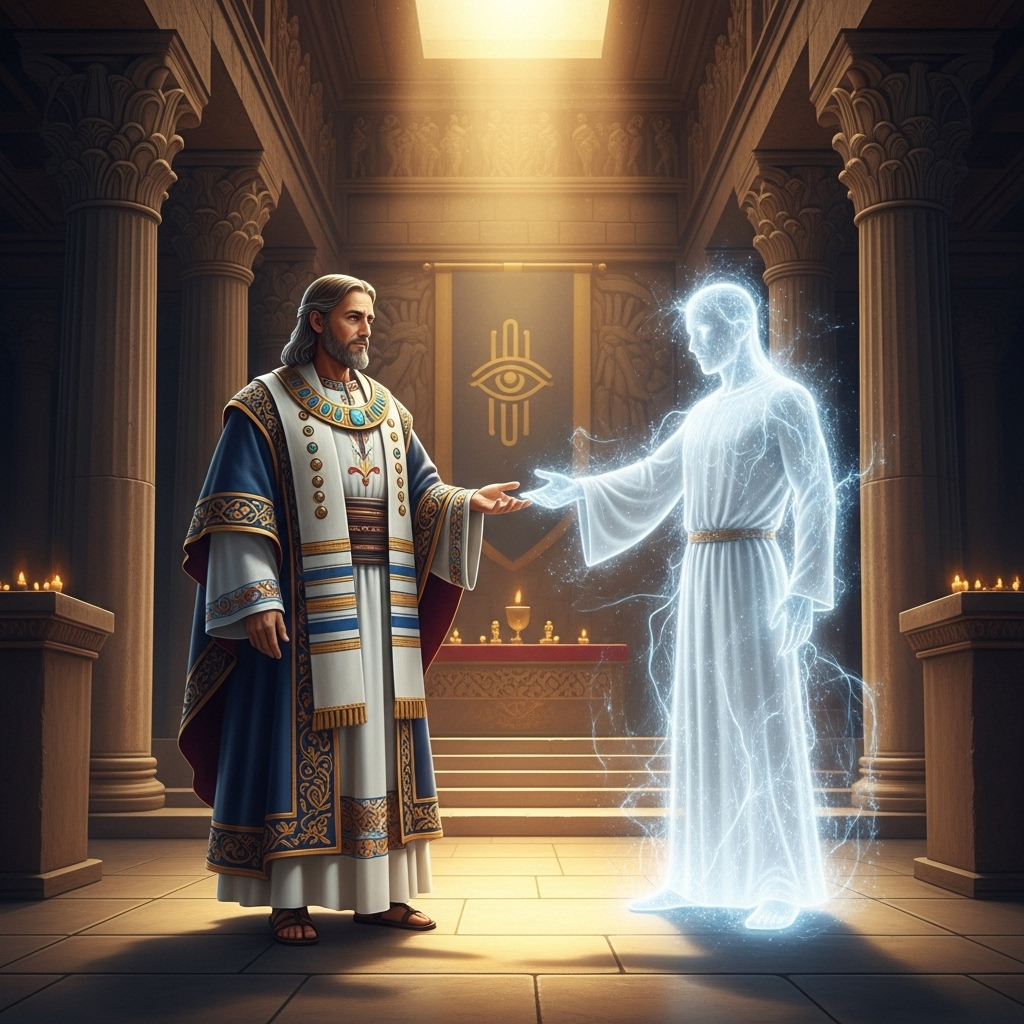
To those ordained in this ancient order was bestowed tremendous authority. By faith, they were given power to “break mountains,” to rend the very foundations of the earth; to “divide the seas,” to dry up waters or turn their courses aside; to “put at defiance the armies of nations,” standing unbowed before the greatest forces of humankind; to “subdue principalities and powers,” establishing dominion over spiritual realms as well as earthly ones. All of this took place “by the will of the Son of God, which was from before the foundation of the world.” In the unfolding of redemptive history, Melchizedek stood as a living pattern of what faith in YHVH could accomplish, a mortal made extraordinary by God’s own anointing.
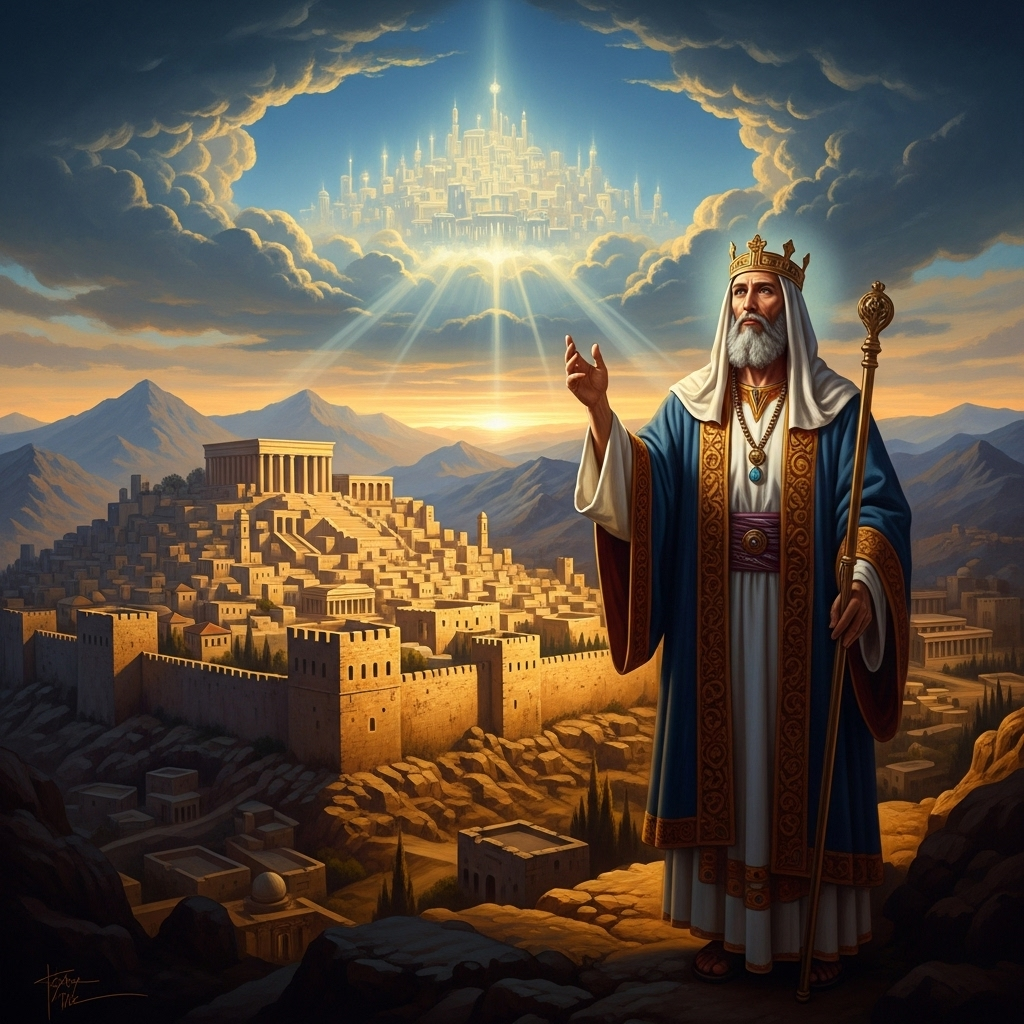
Men and women who attained this level of faith, who were “coming up unto this order of God,” were transfigured and translated, taken from the earth into the direct presence of heaven. Such was the destiny reserved for those who walked in unshakable trust. But it was Melchizedek who, in his day, most fully embodied the calling. He rose to become ruler of Salem, an ancient city whose very name meant “peace.” As its king and its High Priest, he established a reign characterized by harmony and justice. Under his guidance, the people of Salem “wrought righteousness,” seeking not only their own prosperity but the coming of that city of Enoch—an ethereal settlement reserved in a hidden place by El Elyon (Most High God.) for the final days of the present age.
YHVH Himself had sworn an oath by His own name, declaring that “the heavens and the earth should come together, and the sons of Elohim should be tried as by fire.” In anticipation of that great trial, Melchizedek labored to anchor his people in faith and righteousness, calling them to stand firm and to prepare for the coming day when past and future would converge. For him, righteousness was no mere moral code; it was the force that aligned heaven and earth, forging an unbreakable link between the living God and a redeemed humanity.
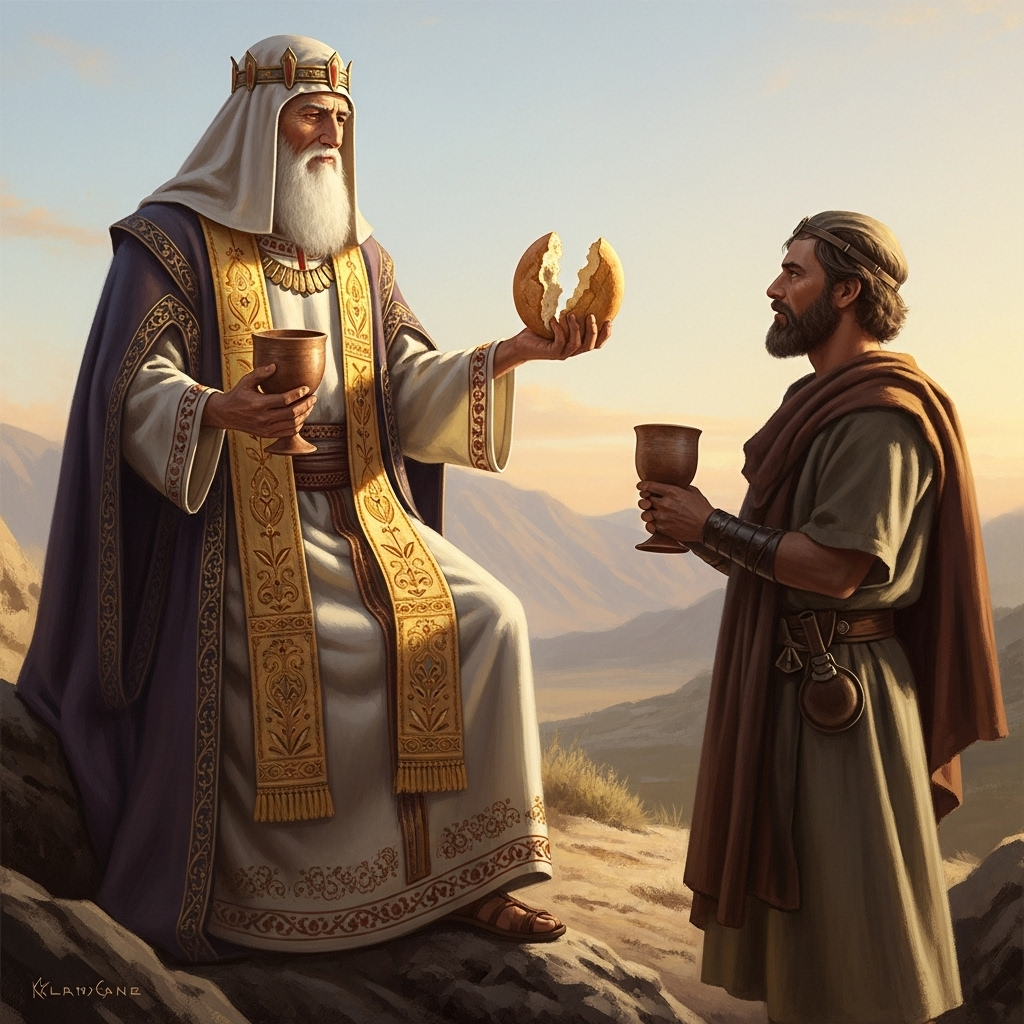
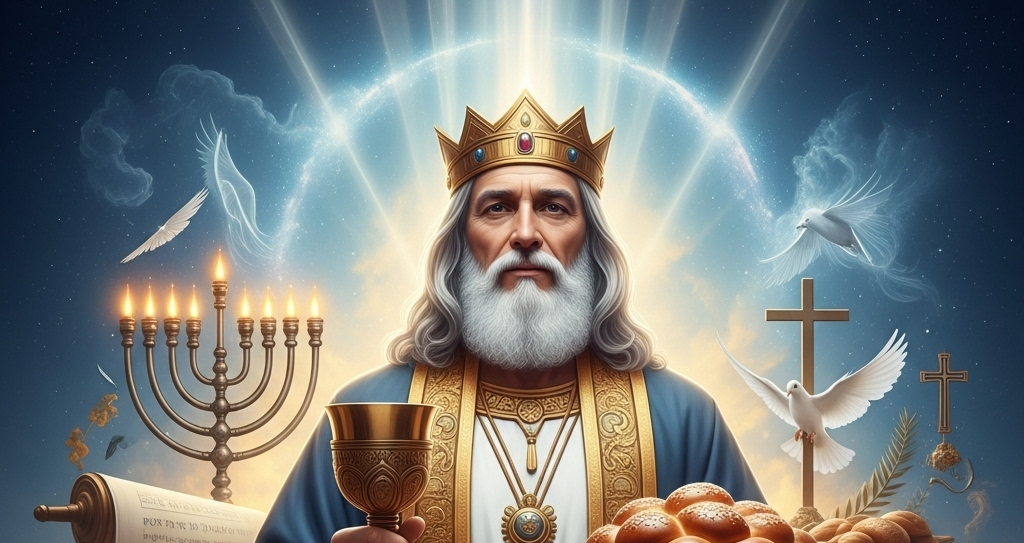
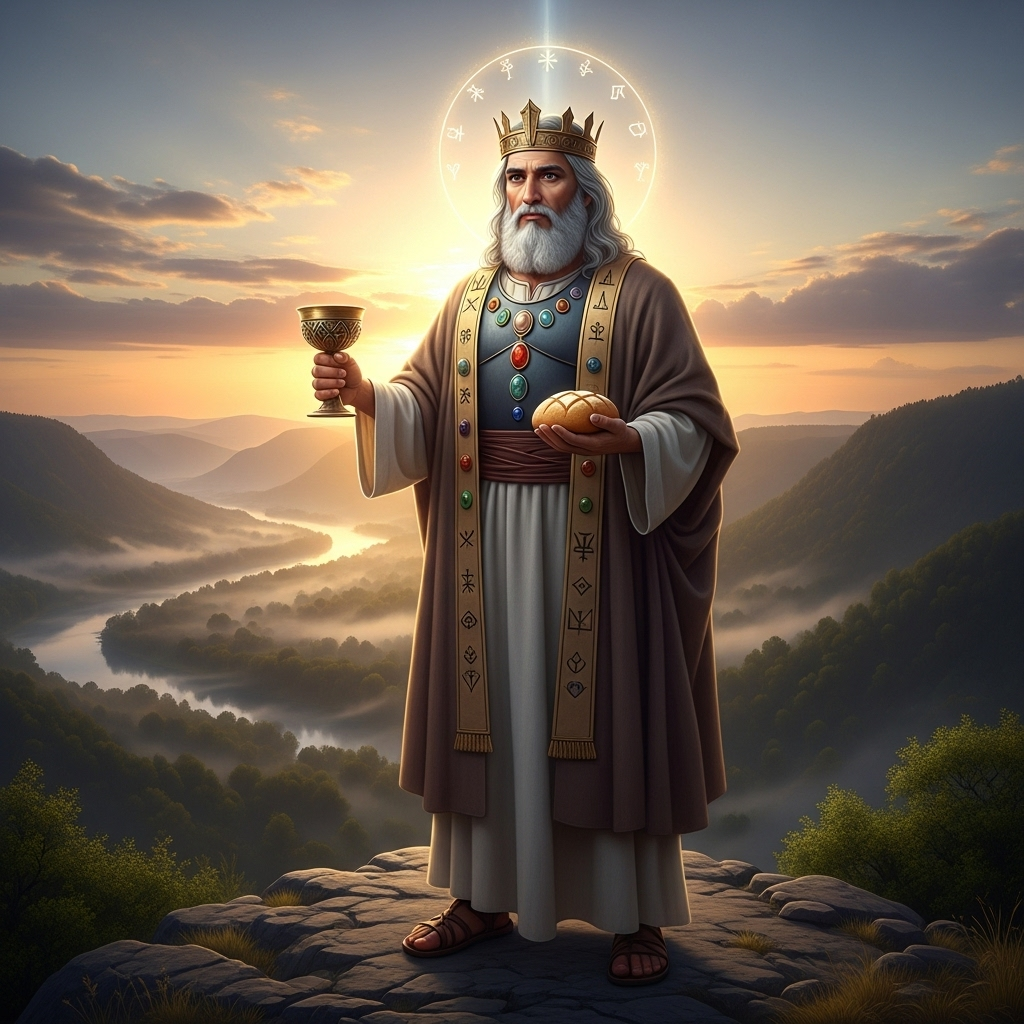
Amid his many roles, priest, king, teacher. Melchizedek is most famously remembered for his encounter with Abram of Ur, later called Abraham. After Abraham’s victory in the rescue of his nephew Lot, he was met by this mysterious figure, “king of Salem” and “priest of the Highest God.” Melchizedek brought forth bread and wine, gifts of simple yet profound symbolism. He broke the bread, blessed it, and commanded Abraham to eat. He blessed the wine, a sign of joy and covenant fellowship. He pronounced a blessing over Abram himself: “Blessed Abram, thou art a man of the Highest Elohim, possessor of heaven and of earth; and blessed is the name of the Most High Elohim, which hath delivered thine enemies into thine hand.”
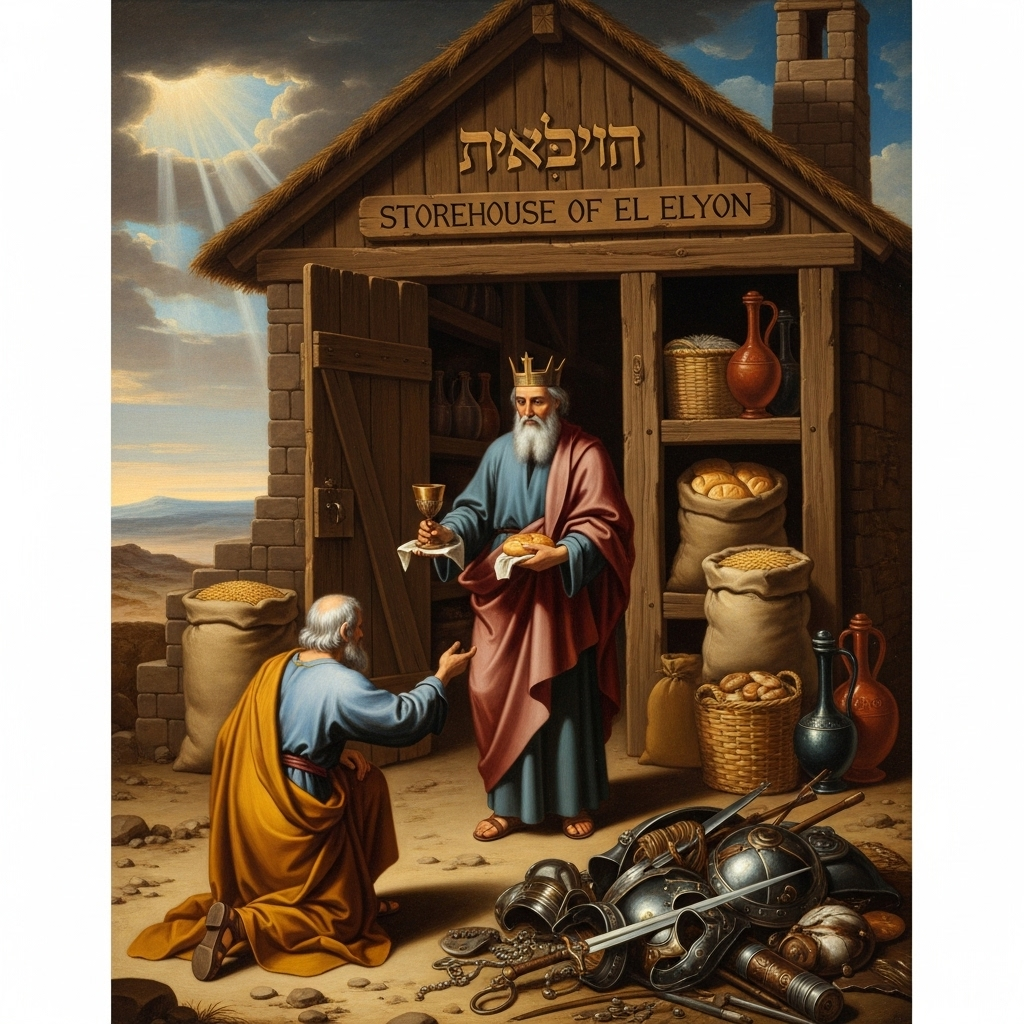
Before giving this blessing, Melchizedek occupied a place of stewardship and service to El Elyon, “the Highest” who reigns supreme above all earthly rulers and spiritual powers. He was “the keeper of the storehouse of El Elyon,” a guardian of divine provision made available to the poor, to the afflicted, and to those who sought refuge in the shadow of the Almighty. From that storehouse, he drew bread for the hungry and wine for the weary. The gesture itself spoke of God’s boundless generosity and the belief that spiritual sustenance precedes material wealth. Abraham, humbled by this encounter, paid tithes, giving Melchizedek a tenth of all his spoils, acknowledging that every victory, every possession, took its source in the hand of El Elyon.
In return for Abraham’s humility, YHVH blessed him: “I will make thy seed as the dust of the earth; so that if a man can number the dust of the earth, then shall thy seed also be numbered.” Thus, the covenant promises were ratified in two ways: by the priestly blessing of Melchizedek and by the sovereign word of God Himself. Abraham would become “the father of all the covenant peoples of YHVH,” a lineage stretching through the ages, even unto us. And Melchizedek’s role in this transaction, receiving tithes from the father of nations sealed his place in the unfolding story of redemption.
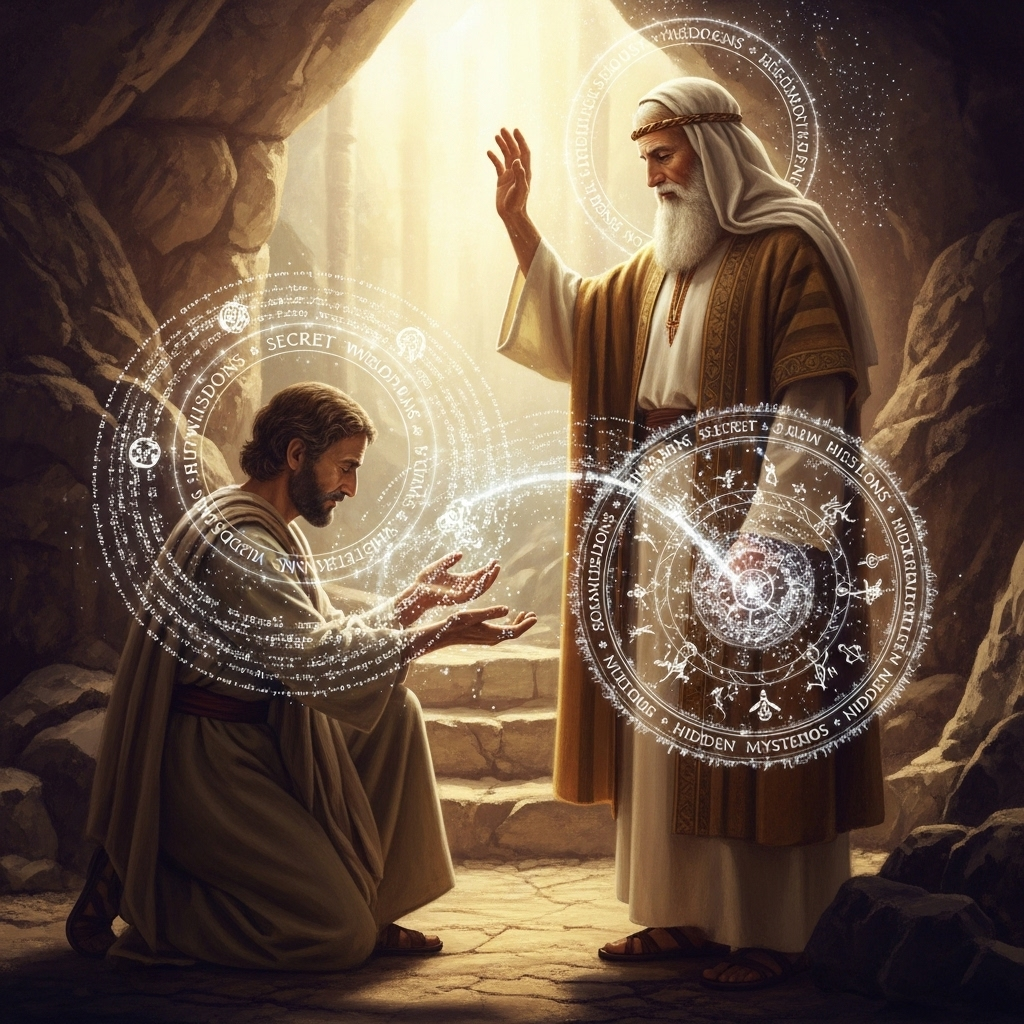
Yet the tale does not end with bread, wine, and a momentary handshake of priestly accord. Before Abraham departed, Melchizedek “lifted up his voice and blessed Abram with secret wisdoms and taught him to guard them until they come forth unto the world, by the will of God, at the last days.” These hidden mysteries secrets of the divine order, glimpses of the heavenly city, signs of a final restoration were entrusted to the patriarch and, by extension, to all who believe. They would remain as treasures safe-hidden, awaiting the appointed time when God’s unfolding plan would usher them forth into the light of day.
When we survey the life and work of Melchizedek, several themes emerge. First, the importance of faith. From the earliest triumphs over lions and fire to his crowning role as High Priest, every act was fueled by unwavering trust in the Highest. Second, the universality of his priesthood. Since it was “after the order of the Son of God,” it transcended ethnic, genealogical, and cultural boundaries; it reached forward and backward across time, uniting all who call upon the Name of YHVH. Third, the integration of kingship and priesthood. Melchizedek was both a ruler “king of Salem” and a servant “priest of the Most High God,” modeling an entwining of temporal authority and spiritual stewardship. Fourth, the foreshadowing of the Last Days. His city of peace would one day meet the city of Enoch; the final trial by fire would bring heaven and earth together; the concealed wisdom would spring forth to enlighten the faithful.
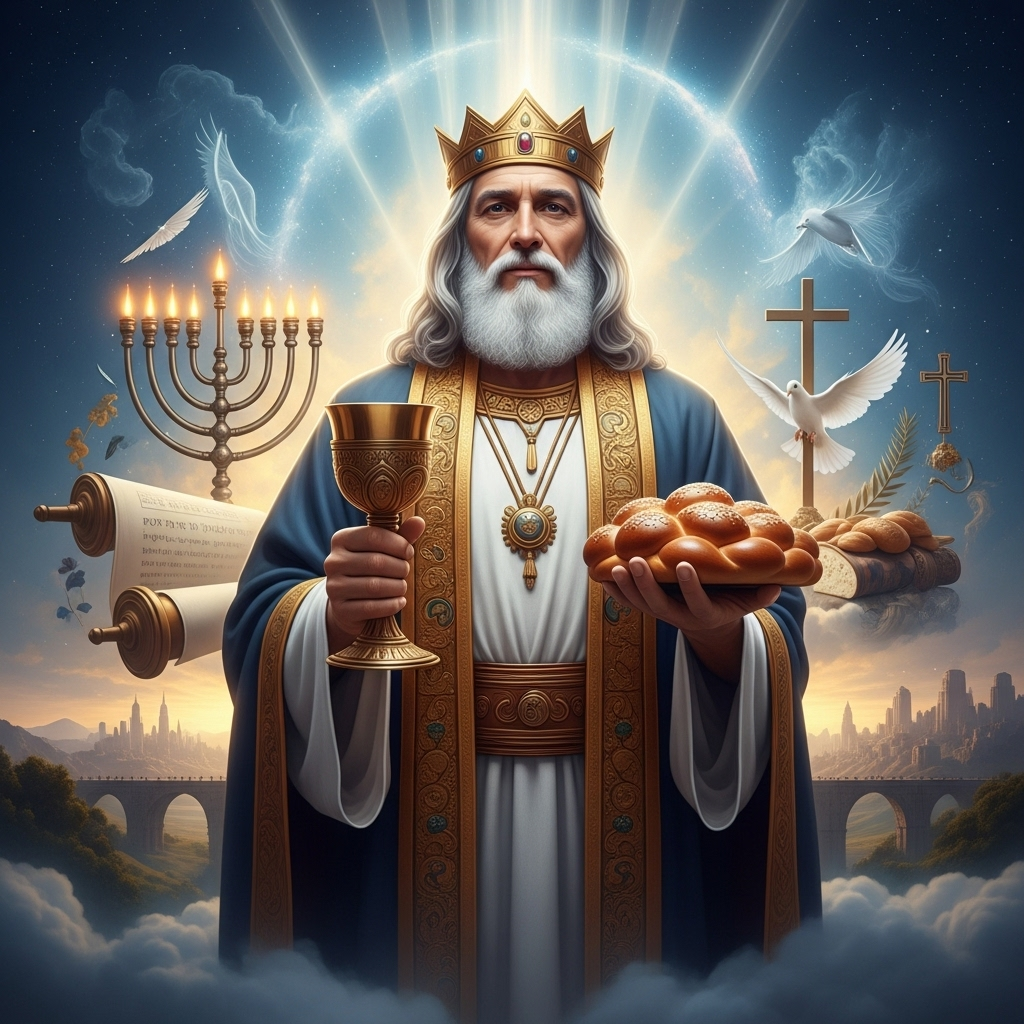
In later writings, the figure of Melchizedek is invoked as a type a picture of the ultimate High Priest who would appear “after the order of Melchizedek,” whose priesthood would never pass away. Christians understand this to be a prelude to the ministry of Jesus Christ, who assumes both royal and priestly functions, offers bread and wine in a new covenant, and secures eternal redemption. In Jewish midrash and mystical traditions, Melchizedek is sometimes identified with Shem, the son of Noah, or portrayed as an immortal teacher who bridges the gap between heaven and earth.
Whatever one’s theological perspective, the portrait of Melchizedek stands out as a luminous thread in the grand tapestry of revelation. He is the one who brought forth the elements of communion; he is the one who blessed the forefather of nations; he is the one who administered the storehouse of charity; he is the one who held in trust the hidden sayings of the Most High. His story invites us to consider how a single life, consecrated to God, can alter the course of history, open the path for covenant peoples, and serve as a wellspring of mystery and blessing for generations unknown.
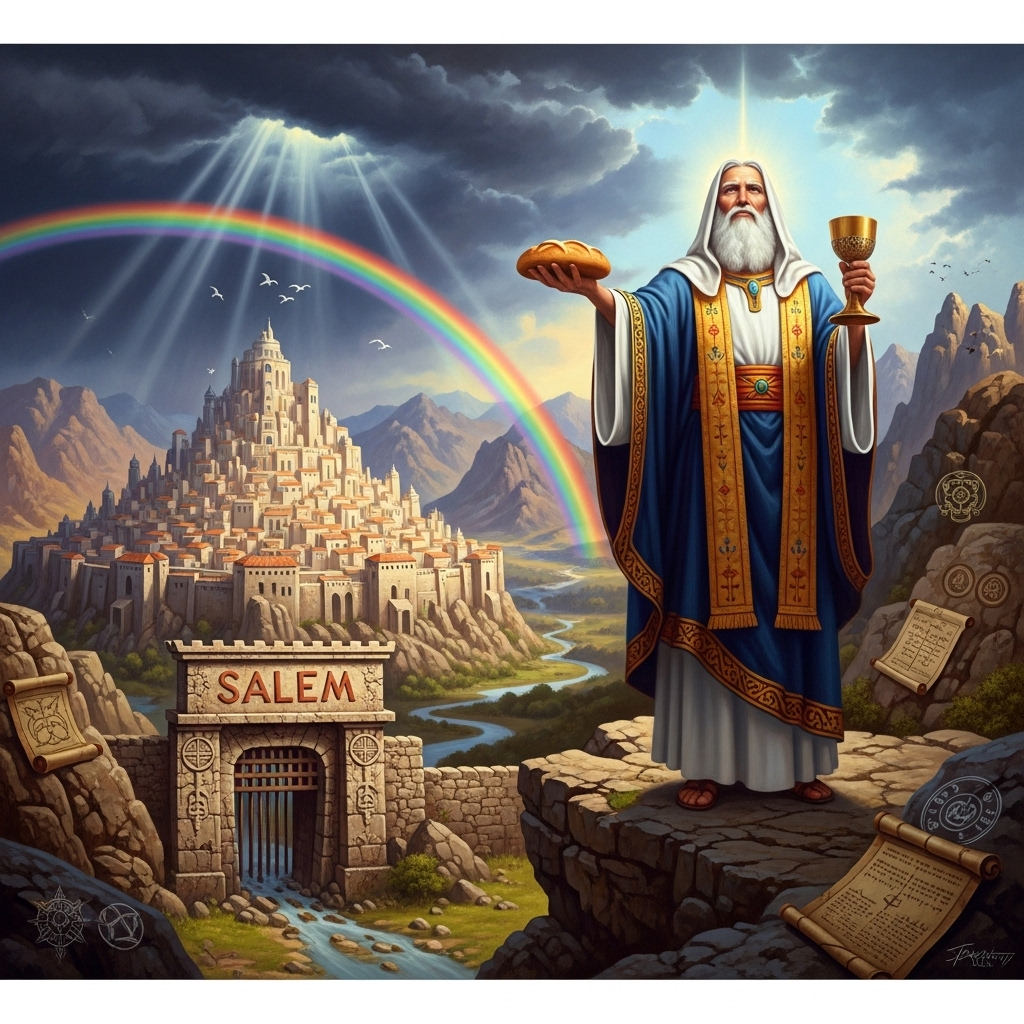
Thus, the tale of Melchizedek endures: a tale of faith overcoming the wildest threats of nature, of priestly power bestowed by divine oath, of peace established in a city named for its benefactor, of bread and wine offered as tokens of heavenly nourishment, of wisdom guarded until the last days. It is a narrative that calls every reader to rise in faith, to honor the ancient priesthood of the Son of God, to seek the hidden knowledge that points beyond mere earthly concerns, and to prepare for the day when heaven and earth shall finally be joined in the Name of YHVH. In remembering Melchizedek, we glimpse the harmony of divine purpose and human obedience, the convergence of temporal service and eternal priesthood, and the promise that all who believe may share in the power once manifested in the king of Salem—Melchizedek, priest of the Most High God. Amen!