
Your cart is currently empty!
Shepherds and Shearers
CHAPTER 1
THE SANCTUARY LIGHTS AND THE HEAVY CAR RIDE HOME
The grand sanctuary of Sovereign Vision Fellowship was still warm with the suffocating heat of stage lighting, fog machines, and hundreds of tightly packed bodies, but as Abe turned his truck out of the paved church lot onto the dark, rain-swept county highway, the air inside the cab felt as heavy as wet stone.
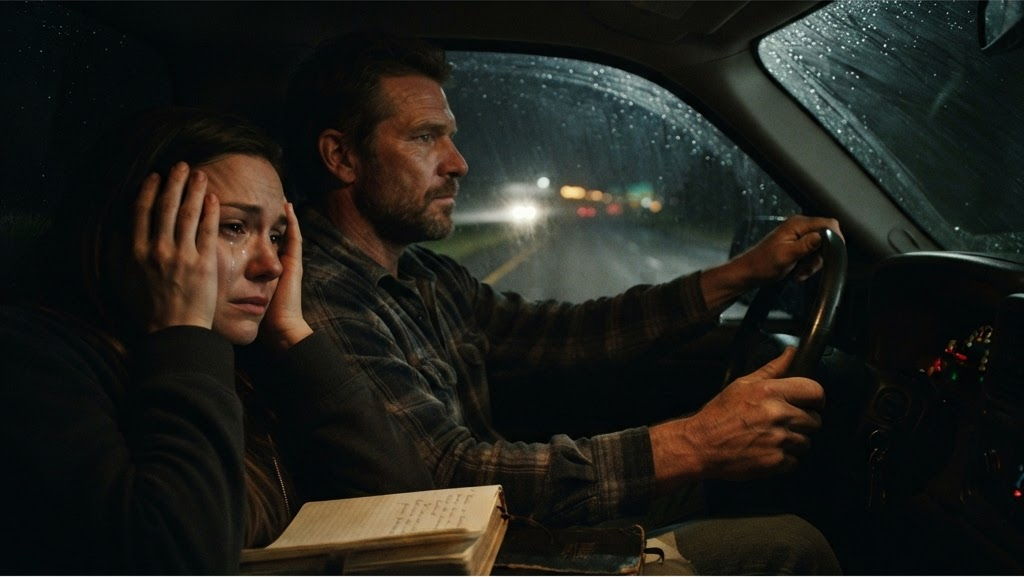
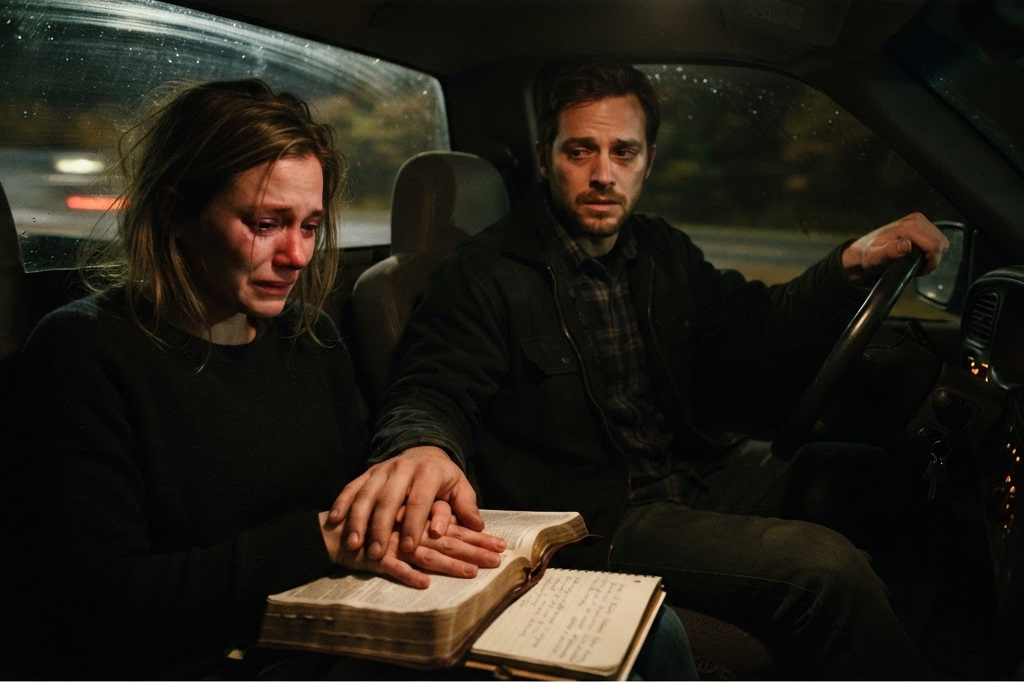
Beside him in the passenger seat, Allison sat with her hands pressed flat against the worn leather cover of her open Bible. Her knuckles were translucent white. For thirty long miles of quiet asphalt, the only sound between them had been the rhythmic, monotonous thrum of tires on tarmac and the gentle, uneven hitch of her breathing. Outside, autumn rain smeared the windshield in long, translucent ribbons, catching the pale glare of distant highway lights.
Abe glanced sideways at his wife. Her eyes, usually so bright with warmth and artistic joy, were rimmed in deep crimson, reflecting the tiny amber glow of the dashboard clock. On her lap, nestled inside her Bible, was her canvas notebook; its pages filled not with notes of grace or Christ’s beauty, but with hasty, anxious scribbles of quotes that had chilled her soul during the three-hour morning production.
“If you question the vision of this house, you question God.”
“Disloyalty is a spiritual rot that forfeits your family’s covering.”
“God does not bless a divided house or a critical, questioning spirit.”
“Those who stand outside the perimeter of full submission will watch their harvest wither.”
Abe reached across the center console, his large, calloused craftsman’s hand covering hers. She did not pull away, but her hand was ice-cold, trembling slightly against his palm.
“Ally,” he said softly, his voice gravelly with a mixture of profound exhaustion and deep grief. “Talk to me, sweet girl. Please.”
A single tear spilled over her lashes, glinting briefly in the dark before tracing a quiet line down her cheek.
“Abe… I felt like I couldn’t breathe today,” she whispered, her voice cracking beneath the weight of hours of held-in sorrow. “When Pastor Chad stood on that high stage under those blinding spotlights and called out the families who were ‘holding back their heart allegiance’… when he looked right toward our row and declared that anyone questioning the multi-million-dollar expansion project was ‘sowing discord in the holy body’… I felt like the floor was caving in beneath us.”
She turned her head to look at him, her eyes wide with an agonizing mixture of fear and confusion. “Are we rebellious, Abe? Is that what we’ve become? We’ve loved these people for seven years. We’ve poured our lives, our savings, and our hearts into our home group. We served communion every month, we set up chairs at five in the morning, we prayed over every family on our street. But lately… every time I read Scripture at home in the quiet of our kitchen and then listen to what comes from that pulpit on Sunday… my heart aches. Am I losing my faith? Is God angry with us for feeling so bruised?”
Abe swallowed hard, a painful lump forming in his throat. His grip on the steering wheel tightened until his fingers ached.
His mind flashed back to the climax of the morning service. Pastor Chad, wearing a sharply tailored Italian suit, draped in theatrical charisma and dramatic cadence, had halted the worship band mid-chorus. The house lights had dimmed, leaving only three intense crimson spotlights focused on the center altar. Pastor Chad had declared that the Holy Spirit was performing “spontaneous miracle manifestations” on the spot, demanding that anyone who wanted to prove their loyalty to God step into the aisle and surrender to the spiritual wave.
Elder Dan and three other leaders had walked down the aisles, ushering people toward the front. When people reached the altar, Pastor Chad pressed his hand forcefully onto their foreheads, shouting commands until they collapsed onto the carpet under the booming bass lines and sweeping synth pads.
And then Abe had seen Bob.
Bob was a seventy-two-year-old retired machinist who had served Sovereign Vision for over twenty years. His knees were ruined from four decades of kneeling on cold concrete shop floors, and his hands were permanently stained with machine oil. He and his soft-spoken wife, Betty, sat three rows ahead of Abe and Allison. When the call came for everyone to rush the altar, Bob had hesitated, gripping the back of the wooden pew to steady his agonized joints.
Pastor Chad had stopped the music entirely. He leveled his microphone toward Bob, his voice booming through the multi-thousand-watt sound system.
“Bob! Don’t let your intellectual pride and legalistic stubbornness block your healing today! Step down to this altar, brother, or admit right now that you’re clinging to a spirit of independence!”
Abe had watched in horror as Bob’s face turned crimson. Tears of intense, overwhelming embarrassment poured down the old man’s wrinkled face as Betty tried to hold him upright under the burning gaze of eight hundred people. Unable to walk without excruciating pain, Bob had bowed his head, turned slowly, and limped out of the sanctuary, Betty holding his shaking arm. They had slipped through the heavy oak doors into the cold parking lot while the music thundered on.
Abe had felt a holy fire ignite in his chest; a deep, burning righteous indignation; mixed with a terrifying wave of disorientation. Right after the benediction, Abe had caught up with Elder Dan in the bustling hallway, pulling him aside into a quiet corner near the bookstore.
“Dan,” Abe had asked, his voice shaking with restrained emotion. “Why was Bob publicly shamed like that? The man has served this church for twenty years. He’s in severe physical pain.”
Elder Dan had fixed Abe with a cold, unblinking glare, leaning in close. “Careful, Abe,” Dan had whispered, his tone dripping with warning. “You’re treading on extremely dangerous ground. Pastor Chad is God’s anointed shepherd over this house. You start questioning the shepherd, and you’ll find yourself and Allison standing outside the fold, without a spiritual covering. Disloyalty starts with small questions.”
Now, driving through the autumn night, those heavy words echoed in Abe’s mind like iron doors slamming shut in an ancient dungeon.
Outside the fold. Without a covering. Rebellious. Disloyal.
On his phone, which sat in the cup holder, a group text chat had been buzzing incessantly since 1:00 PM. Members of their small group; Cathy, Debra, and several others; were sending panicked messages.
Cathy had texted: “I’m so scared. Pastor Chad said today that if we don’t fulfill our building pledges, God might withdraw His blessing from our children. Debra are you guys going to give extra this month?”
Debra had replied: “We don’t have it, Cathy. Dan called my husband this afternoon to ask why our tithe was lower this month. I’ve been crying in the bathroom all afternoon. I feel like such a failure.”
Abe pulled the truck into their gravel driveway, the bright headlights sweeping across the white wooden porch of their small farmhouse. He turned off the ignition, and the engine sputtered into profound, solemn silence.
Allison hid her face in her hands and began to sob quietly; not out of anger, but out of sheer, bone-deep, spiritual exhaustion.
“I don’t want to go back, Abe,” she whispered, her voice barely audible above the steady patter of rain on the metal roof. “I leave that building every Sunday feeling beat down, bruised, and terrified. I feel like I’m failing God every hour of the week because I can’t live up to the impossible standards and the emotional hype. Where is Jesus in all of this? Where is His peace?”
Abe wrapped his strong arm around her shoulders, pulling her fragile frame against his chest. He closed his eyes and prayed silently, his heart groaning in words far too deep for speech.
He reached down and picked up his phone. His thumb hovered over the screen. There was one person; one seasoned, godly man; whose life and teaching had reflected the quiet, holy beauty of Jesus Christ for as long as Abe had known him. A man who had walked alongside Abe and Allison through their engagement, their early marriage, and their deepest spiritual trials. A man who had served as a mentor, elder brother, and spiritual refuge.
His name was Edward.
Abe typed a brief, agonizingly honest message:
“Brother Edward, Allison and I are broken tonight. We left service feeling bruised, terrified, and exhausted. We’re being told that our questions, our concerns, and our heartache are signs of rebellion against God. We don’t know how to discern what is happening anymore. Can we please come see you?”
Not three minutes passed before the phone vibrated in Abe’s hand. The reply came back, radiating the gentle, calm warmth of a true shepherd’s heart:
“Dear Abe and Allison: My heart breaks with yours, but do not be afraid. You are not rebellious for seeking the truth of God’s Word. Come to my study tomorrow evening. We will open the Scriptures together, brew a warm pot of tea, and bring every heavy burden to the feet of King Jesus. Your souls belong to Him, and He is a tender Shepherd. Peace be with you both.”
Abe held the phone so Allison could read the screen. As her eyes swept over Edward’s words, the tight, suffocating knot in her chest began, for the very first time in long months, to slowly untie.

CHAPTER 2
THE LAMP ON THE CEDAR TABLE
The following evening, twilight painted the sky in soft shades of indigo, plum, and burnished gold as Abe and Allison drove up the winding dirt path leading to Edward’s country cottage. Nestled among ancient, towering oak trees and wild pine, Edward’s home had always been a sanctuary of deep peace and spiritual rest.
As they walked up the flagstone path, the heavy oak door swung open before they could even knock. Standing on the threshold was Edward. In his late sixties, with silvery hair, warm blue eyes framed by gentle laugh lines, and a thick woolen cardigan, Edward looked every bit the faithful elder brother he was. He smelled faintly of sweet dried cedar wood, and old paper; the comforting, timeless scent of a life spent steeped in Holy Scripture and silent prayer.
“Come in, my dear children,” Edward said, his deep, resonant voice rich with sincere affection. He wrapped Abe in a strong, loving embrace, then turned to Allison, taking both of her cold hands in his and pressing a gentle kiss to her forehead. “Come inside out of the chill.”
The study inside was lined from floor to ceiling with wooden bookshelves packed with centuries of Christian classics; Spurgeon, Augustine, and thick theological commentaries. In the far corner, a cast-iron wood-burning stove crackled merrily, casting a golden light across a large cedar dining table where a ceramic teapot was already steaming beside three stoneware mugs.
In the center of the table lay Edward’s Bible; a thick, worn, leather-bound copy, its margins filled with decades of handwritten notes, its pages soft, supple, and yellowed from thousands of hours of prayerful study.
After settling onto the comfortable leather armchairs, Edward poured the dark, aromatic tea, passing a mug to Allison and one to Abe. He took a seat across from them, folding his hands over his open Bible. For a long, quiet moment, he simply looked at them with profound tenderness and compassion.
“I have prayed for you both all day,” Edward began softly, his voice cutting through the heavy lingering tension in their spirits. “I know the heavy weight you are carrying tonight. I know the peculiar, agonizing confusion that settles over a believer’s heart when the sanctuary; the very place meant to be a haven of grace and truth; becomes an arena of spiritual pressure, legalistic judgment, and human performance.”
Allison looked up from her tea, her eyes glistening with unshed tears. “Brother Edward… how do we know if we’re doing the right thing? All week long, we’ve been told that comparing Pastor Chad’s sermons to Scripture or expressing concern over his leadership style is a sign of a ‘critical, rebellious spirit.’ Elder Dan told Abe yesterday that if we question the vision or step away, we are removing ourselves from under God’s protective covering. It makes me feel so terribly guilty… like I’m betraying the body of Christ.”
Edward leaned forward, his expression solemn yet deeply reassuring. He opened his Bible, resting his hands flat on the parchment.
“Let us clear away the smoke of human opinion, Allison,” Edward said gently, “and shine the clear, unclouded light of God’s Word upon your hearts. The very first principle the Holy Spirit wants you to understand tonight is this: Discernment is not rebellion.”
He turned the pages to the Book of Acts, his fingers moving with practiced familiarity.
“Look here with me at Acts chapter 17, verse 11,” Edward instructed. Abe and Allison leaned over the cedar table, their eyes following Edward’s finger as he read the inspired words:
“Now the Berean Jews were of more noble character than those in Thessalonica, for they received the message with great eagerness and examined the Scriptures every day to see if what Paul said was true.” Acts 17:11
Edward tapped his finger on the verse. “Notice what God’s Word says here, my children. When the Apostle Paul; the greatest theologian, apostle, and church planter in human history, an inspired writer of Holy Scripture; came preaching to the believers in Berea, how did they respond? Did they bow down in unquestioning, blind submission to his apostolic title? Did Paul demand that they accept his words without examination?”
“No,” Abe murmured, reading the text closely. “They examined the Scriptures every day to see if what Paul said was true.”
“Precisely!” Edward’s eyes kindled with a quiet, holy fire. “And how did the Holy Spirit describe those Bereans? Did He call them ‘rebellious’? Did He accuse them of having a ‘critical spirit,’ being ‘disloyal,’ or ‘touching God’s anointed’? No! God Himself called them ‘more noble character.’”
Edward looked squarely at Abe and Allison. “If even the Apostle Paul was subject to the test of Holy Scripture, what earthly pastor, no matter how charismatic, famous, ambitious, or silver-tongued, can dare place himself above that same test?”
A deep, sacred silence filled the study, punctuated only by the quiet crackle of the wood stove and the ticking of the clock.
“Spiritual authority,” Edward continued, his voice steady, firm, and resonant, “does not reside in a human man, a charismatic title, a pulpit, a multi-million-dollar facility, or a pastor’s grand ambition. Spiritual authority resides exclusively in the Word of God. A true pastor is merely a humble voice pointing to the King; he has no authority of his own apart from Scripture. When a leader uses the pulpit to demand absolute, unquestioning submission to his personal vision, when he refuses open, humble, Berean dialogue around the Scriptures, he is no longer operating under biblical order. He has usurped the authority that belongs to Jesus Christ alone.”
Allison let out a long, trembling breath. It sounded as though a heavy iron band that had been tightened around her chest for months had suddenly snapped open.
“So… when we check what he preaches against the Bible… we aren’t sinning?” she asked softly.
“You are honoring God!” Edward declared warmly that his face lighting up with a radiant smile. “You are exercising the sacred duty that belongs to every blood-bought disciple of Jesus. First Thessalonians 5:21 commands us: ‘Test all things; hold fast what is good.’ First John 4:1 warns us: ‘Do not believe every spirit but test the spirits whether they are of God.’ To turn off your mind, mute your conscience, and blindly follow a human leader into error is not faithfulness; it is spiritual lethargy. God called you to be mature, discerning disciples, not spiritual captives.”
Abe looked at his mentor, his brow furrowed with earnest inquiry. “But Brother Edward, what about this constant claim of ‘spiritual covering’? Pastor Chad and Elder Dan preach almost every week that the pastor is our direct line of protection, and that if we question him or leave the house, we lose God’s grace and expose our family to spiritual destruction.”
Edward smiled gently, a look of profound pastoral compassion sweeping over his face.
“My dear brother,” Edward said softly, “where in the entire New Testament do you find a human pastor placed as a mediator between a believer and God? First Timothy 2:5 settled that question for all eternity: ‘For there is one God and one Mediator between God and men, the Man Christ Jesus.’ Your spiritual covering is not a mortal man in an expensive suit on a Sunday stage. Your spiritual covering is the precious, shed blood of Jesus Christ! He is your High Priest. He is your Shield, your Fortress, and your Shepherd. No human pastor gave you that covering, and no human pastor can ever take it away!”
Tears welled in Allison’s eyes once more, but this time they were not tears of fear, confusion, or condemnation. They were the first refreshing drops of a sweet, restoring rain upon a long; parched soul.

CHAPTER 3
SHEPHERDS AND SHEARERS
Edward reached into his antique tea box, taking a small wooden scoop of loose lavender blossoms and dried chamomile to refresh the ceramic teapot. The delicate dried flowers billowed in the hot water, releasing a soothing, floral perfume that mingled with the warm scent of cedar in the study.
“Tell me more about Bob,” Edward said quietly, looking across the cedar table at Abe. “You mentioned his name in your message last night. What happened to our dear brother?”
Abe looked down at his stoneware mug, his large craftsman’s fingers tracing its glazed rim. The painful image of the old machinist’s humiliated face flashed before his mind with agonizing clarity.
“Bob is seventy-two years old, Edward,” Abe said, his voice thick with rising emotion. “He worked forty years in the tool-and-die shop downtown, breathing in iron dust and metal shavings so he could provide for his family and give generously to the work of God. His body is broken from decades of hard physical labor. He has severe osteoarthritis in both knees, but every single Sunday morning for twenty years, Bob was the first one to arrive at the building to set up communion, wipe down tables, and pray over the seats before anyone else arrived.”
Abe looked up, his dark eyes flashing with righteous sorrow. “Yesterday, during the service, Pastor Chad was performing one of his dramatic ‘faith healing’ routines on stage. He called for anyone with chronic pain to come forward to the altar. Bob stayed in his seat; not because he doesn’t believe God can heal, but because he’s a quiet, humble man who hates public spectacle, and his knees were hurting so badly he could barely stand.”
Allison took over, her voice trembling with empathy. “Pastor Chad stopped the music. He looked down from the stage right at Bob. He said into the microphone for everyone to hear: ‘Some of you are clinging to your sickness because you have a spirit of legalistic stubbornness!” Bob, stand up! If you had real faith, you’d walk up these steps right now!’ Everyone turned and stared at him.”
“Bob tried to stand,” Abe whispered, tears forming in his eyes. “He pushed himself up on the back of the pew, his legs shaking violently. But the pain was too severe, and his knees buckled. He collapsed back into his seat. Betty was crying, holding his arm. Pastor Chad just shook his head on stage and said, ‘Well, you can’t heal a heart that refuses to yield to spiritual authority,’ and then moved on to the next person.”
Edward closed his eyes. A profound, mournful sigh escaped his lips. He leaned his elbows on the table and buried his face in his hands for several long, silent moments. When he looked up, his eyes were wet with tears of holy sorrow.
“Oh, my shepherd’s heart grieves,” Edward whispered, his voice trembling with deep emotion. “How Scripture describes this very wickedness! Open your Bibles with me to Ezekiel chapter 34.”
Abe and Allison turned the pages together. Edward read the ancient words of the Prophet Ezekiel, his voice filled with the divine weight of God’s own heart:
“Son of man, prophesy against the shepherds of Israel; prophesy and say to them: ‘This is what the Sovereign Lord says: Woe to you shepherds of Israel who only take care of yourselves! Should not shepherds take care of the flock? You eat the fat, clothe yourselves with the wool, you slaughter the choice animals, but you do not feed the flock. You have not strengthened the weak or healed the sick or bound up the injured… You have ruled them harshly and brutally.’” Ezekiel 34:2–4
Edward pointed to the parchment. “God saw it in Ezekiel’s day, and He sees it today. Look at the stark contrast God draws between a true shepherd of Jesus Christ and a leader who misuses his office. A true shepherd feeds the sheep with the substantive, clear truth of Scripture. He binds up their wounds, strengthens the weak, and equips them with grace and truth. But an unhealthy, self-exalting leadership culture continuously shears the sheep!”
“Shears them…” Allison repeated softly, the picture striking a deep, poignant chord in her heart.
“Yes!” Edward said passionately. “A false shepherd uses the flock for his own ends; for his reputation, his budget, his expansion schemes, and his ego. He doesn’t feed the sheep; he shears them! He uses the pulpit as a weapon to beat people down with heavy legalism; a constant barrage of ‘do’s and don’ts.’ He publicly or privately corrects out of control and pride rather than humble love. And he leaves believers feeling exhausted, anxious, guilty, and spiritually deflated week after week.”
Edward turned the pages to the New Testament, to First Peter chapter five.
“Be shepherds of God’s flock that is under your care, watching over them… not lording it over those entrusted to you, but being examples to the flock.” 1 Peter 5:1–3
“Look at Peter’s exhortation,” Edward urged gently. “Not lording it over them! Not ruling them harshly or brutally! A true shepherd of Jesus Christ is a servant, an example of humility, grace, gentleness, and patient teaching. He does not beat the sheep; he leads them to quiet waters.”
Edward leaned across the cedar table, taking Abe’s hand in his left and Allison’s hand in his right.
“I want you both to ask yourselves a simple, diagnostic question,” Edward said, his voice dropping to a tender, penetrating whisper. “When you leave the worship service on Sunday afternoon, what do you carry in your hearts? Are you built up in the grace, freedom, and power of the Holy Spirit to be shining lights in your community (Ephesians 4:11–13)? Or do you feel bruised, heavy, anxious, and lacking motivation because the Word was used as a dagger to wound you rather than bread to give you spiritual life?”
Allison bowed her head, tears raining down onto her open notebook. “It’s a dagger, Edward,” she sobbed softly. “Every single week, I leave feeling like I am never enough, like God is disappointed in me, like I’m walking on eggshells. I haven’t felt the pure joy of my salvation in over a year.”
Abe squeezed her hand tightly, his heart breaking for his wife. “Me too, Edward. I’ve been trying to work harder, serve more hours, pray longer, give more money… just to keep the guilt away. But the demand never stops. It’s never enough.”
“My dear children,” Edward said, his voice overflowing with fatherly tenderness. “Jesus said in Matthew 11:30: ‘My yoke is easy and My burden is light.’ If the yoke you are wearing in that church is heavy, suffocating, crushing, and driving you into despair, then I assure you before the throne of Almighty God; that yoke did not come from Jesus Christ.”

CHAPTER 4
STAGE LIGHTS VS. THE STARLIGHT OF THE CROSS
The cast-iron stove crackled warmly, casting soft orange embers across the cedar table. Edward took a slow sip of his lavender tea, letting the peaceful silence settle into the room like a healing balm before continuing.
“There is another vital boundary we must examine under the light of Scripture,” Edward said thoughtfully. “And it concerns the very center, focus, and atmosphere of preaching.”
He turned his Bible to the Gospel of John, chapter 12, verse 32, and read aloud:
“And I, when I am lifted up from the earth, will draw all people to myself.” John 12:32
“When a church is healthy and centered on Jesus Christ,” Edward explained, “the central focus of every sermon, every song, every project, and every gathering will consistently be the cross, the gospel, and the glory of God. The preacher delights to decrease so that Jesus alone may increase. The glory of Christ shines like the calm, eternal starlight.”
Edward paused, his blue eyes searching Abe’s face. “But what happens when a pastor becomes focused on personal legacy, grand expansion schemes, building satellite circuits, and drawing crowds through theatrical displays?”
Abe thought of the massive multi-city expansion campaigns Pastor Chad had launched over the past eighteen months. He thought of the promotional videos featuring Pastor Chad’s face on giant screens, the laser light shows, the dramatic announcements of “apostolic networks,” and the non-stop pressure for church members to sign multi-year financial pledges to build “The Chad Network Citadel.”
“The focus subtly shifts,” Abe said slowly, realization dawning in his soul. “It stops being about lifting up Christ and starts being about lifting up a man’s kingdom.”
“Precisely,” Edward affirmed gently. “And when a leader becomes focused on personal kingdom-building, sensationalism always follows. Pure, faithful biblical exposition doesn’t feed human ambition or produce instant, sensational crowds. So, the pulpit becomes a stage for dramatic performances, manufactured emotionalism, and theatrical displays.”
Allison looked up, her expression thoughtful yet earnest. “Brother Edward… what about the miracles? Pastor Chad talks constantly about signs, wonders, and supernatural manifestations. In our group text today, Cathy and Debra were terrified that if we leave, we’re walking away from the Holy Spirit.”
Edward smiled warmly, holding up his hands. “God is indeed a God of miracles, signs, and wonders, Allison! He heals the sick, He answers prayer, and He works sovereignly according to His holy will. We never deny the supernatural power of God. But hear me carefully: we must test every manifestation against Scripture.”
He turned the pages to Galatians chapter 5 and First Corinthians chapter 14.
“The Scripture tells us in Galatians 5:22–23 that the true fruit of the Holy Spirit is love, joy, peace, patience, kindness, goodness, faithfulness, gentleness, and self-control. And First Corinthians 14:33 declares that ‘God is not the author of confusion, but of peace.’”
Edward’s voice grew solemn and deep. “When ‘miracles’ are manufactured, forced, or used as a public spectacle to display personal spiritual power; when people are emotionally coerced, pushed to the ground, or shamed if they don’t react on command; it moves far away from the Holy Spirit and straight into spiritual manipulation. The Holy Spirit produces humility, order, repentance, and reverence for Jesus. He never uses human beings as props for a pastor’s stage show.”
Edward leaned back in his leather chair, looking up at the wooden rafters as memory swept over him. A soft, reflective expression settled onto his weathered face.
“Fifteen years ago,” Edward began softly, his voice rich with personal history, “I sat in the very same pews at Sovereign Vision Fellowship.”
Abe and Allison blinked in shock. “You did?” Abe asked.
“I did,” Edward nodded, a gentle, sad smile touching his lips. “When I first arrived there years ago, I was drawn by the energy, the passion, and the promise of great kingdom impact. But over time, I watched the subtle creep of spiritual pride. I saw the pastor begin to place his personal expansion vision above the spiritual safety and health of the sheep. I saw sincere believers who asked biblical questions get quietly blacklisted, called ‘rebellious,’ and driven out in tears.”
Edward looked directly into Abe’s eyes, his expression full of profound emotional intimacy. “For a long, painful season, I wrestled with God. I lay awake at night asking, ‘Lord, why did You place me in this environment? Why am I suffering through this confusion?’ And do you know what the Lord revealed to my heart?”
“What, Edward?” Allison asked softly.
“He showed me that He used that season to give me eyes to see,” Edward answered, his voice thick with gratitude. “He allowed me to experience that pain so that I could protect my own walk, guard my family, and one day… stand as an elder brother to guide precious disciples like you and Abe through the exact same furnace.”
Edward stretched his arms across the table, placing his hands over theirs. “Your season at that church was not wasted, Abe. God was not asleep. He used it to sharpen your discernment, to deepen your hunger for pure biblical truth, and to teach you that your ultimate allegiance can never belong to a human leader, a pulpit, or a building; your highest allegiance will always belong to King Jesus.”
Edward opened his Bible to First Corinthians chapter 11, verse 1.
“The Apostle Paul gave us the vital boundary for all human leadership in eight simple words,” Edward said:
“Follow my example, as I follow the example of Christ.” 1 Corinthians 11:1
“Notice that crucial word: as,” Edward emphasized. “Biblical submission to human leaders is always conditional. You are commanded to honor the office of a pastor, but you are never called to follow a leader into false teaching, spiritual abuse, or unbiblical practices. If a pastor refuses to be held accountable to God’s Word, dismisses sincere spiritual concerns, and places his vision above the spiritual safety and maturity of the sheep, he has removed himself from the pattern of Christ. And you honor God by stepping out.”
CHAPTER 5
THE DIAGNOSTIC HOUR AT THE FAMILY TABLE
The clock on the wooden mantelpiece chimed softly, its twelve slow strokes marking the midnight hour. The fire in the wood stove had settled into a deep, glowing bed of crimson embers, radiating a steady, comforting heat through the study.
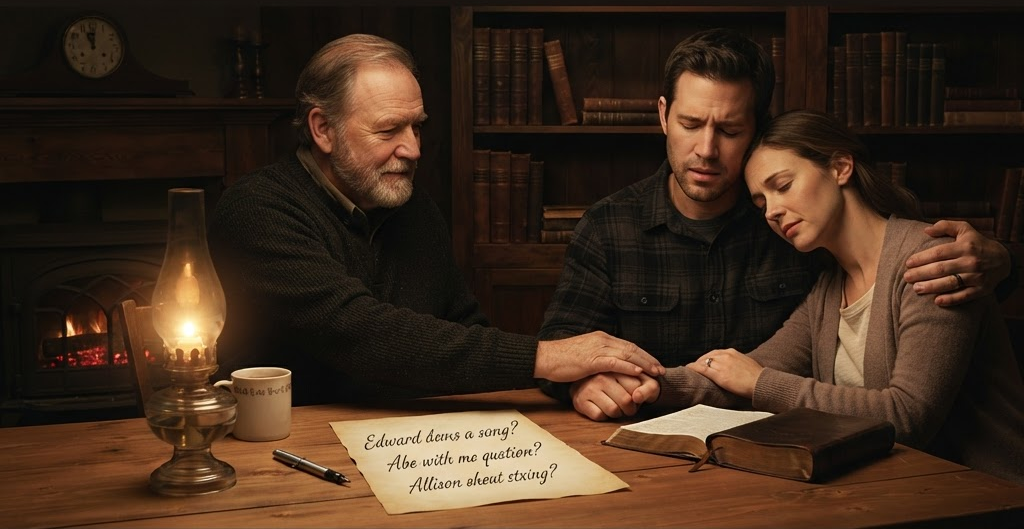
Edward reached into his desk drawer and brought out a sheet of ivory paper. With his silver fountain pen, he wrote down three clear, diagnostic questions in his elegant script. He slid the paper across the cedar table toward Abe and Allison.
“As you and Allison bring this before the Lord together in prayer over the coming days,” Edward said, his voice full of quiet, pastoral solemnity, “I want you to discuss these three simple diagnostic questions. Do not answer them in panic or fear, but in the gentle light of God’s Word.”
Abe picked up the paper and read the first question aloud, his deep voice echoing softly in the quiet room:
1. Is the Word of God being preached with substance and clarity, or is the pulpit being used for personal authority, emotional manipulation, and human performance?
Abe looked at Allison. For months, they had tried to justify the sermons; telling themselves that perhaps they were just being overly critical, or that Pastor Chad’s theatrical delivery was just his personal style. But laid out plainly against Scripture, the truth was unassailable.
“It’s performance, Abe,” Allison said softly, her eyes clear and untroubled for the first time in memory. “It’s story-telling about grand vision, emotional music designed to manipulate feelings, and legalistic warnings about disloyalty. Scripture is used as a springboard for human projects, not unfolded as the holy bread of life.”
Edward nodded silently, allowing the Holy Spirit to witness to their hearts without human pressure.
Abe read the second question:
2. Are you, your wife, and the parishioners being nourished, loved, and built up into mature disciples of Jesus, or are people being bruised, hurt, and driven away from Christ?
At this question, Allison wept quietly; not tears of bitterness, but tears of deep, compassionate sorrow for the sheep she loved.
“Our friends are hurting so badly, Edward,” she whispered, wiping a tear from her cheek. “Bob and Betty left in shame yesterday. Cathy texted me today saying she lies awake at night terrified that her children will be cursed because she had a passing thought of doubt about the building campaign. Debra stopped coming to small group because she couldn’t take the non-stop pressure to donate money she doesn’t have. We aren’t being built up into mature disciples… we are being exhausted, bruised, and driven into spiritual dark places.”
Abe read the third and final question, his thumb tracing the wet ink on the paper:
3. If you stay, can you faithfully protect your own soul, your marriage, and your spiritual growth under this spiritual covering without compromising your conviction before God?
The question hung in the quiet room like a golden bell lingering in the air.
Abe looked deep into his wife’s eyes. He saw the pale shadow of the joyful, vibrant woman he had married seven years ago; a woman whose creative love for God had been slowly suffocated by the heavy blanket of legalism and toxic fear. He thought of his own soul; how he had caught himself growing cynical, guarded, and spiritually exhausted.
“No,” Abe said firmly, his voice steady with unyielding conviction. “We can’t stay. If we stay, we will have to mute our consciences every Sunday. We will have to pretend that Bob’s public shaming didn’t matter. We will have to participate in emotional displays that we know in our hearts are manufactured hype. To stay under these conditions would be to compromise our sacred conviction before King Jesus.”
Edward reached across the table, laying his large, warm hands over theirs.
“Then let your hearts be entirely settled,” Edward declared with divine authority and grace. “If the Holy Spirit convicts you that it is time to step away, do not leave in anger, strife, or loud debate. Do not start a public war, do not post bitter words online, and do not engage in gossip. Walk away in quiet, noble peace and holy confidence.”
Edward looked directly into Abe’s eyes, his face illuminating with fatherly reassurance.
“Stepping out of a spiritually unhealthy environment is not abandoning God, Abe! It is honoring God by seeking a flock where His Word is truly honored and His sheep are truly fed. You are not running away in cowardice; you are stepping out in faith to protect the spiritual health of your home.”
A weight that Abe had carried for nearly two years; a crushing, suffocating iron cloak of false guilt; seemed to slide off his shoulders and shatter onto the wooden floor.
He lowered his head onto the cedar table and let out a deep, shuddering breath, tears of pure, unutterable relief soaking into his sleeves. Beside him, Allison leaned her head against his shoulder, her hand resting on Edward’s open Bible.
In that quiet study, surrounded by ancient books and the warm glow of dying embers, the Holy Spirit brought a sweet, heavenly calm to their souls. The storm outside had not vanished, but the fog of confusion inside their hearts was entirely gone.

CHAPTER 6
WALKING OUT IN PEACE: A HARVEST OF GRACE
Two evenings later, Abe sat at his kitchen table under the warm yellow light of the lamp. Beside him sat Allison, holding a steaming mug of tea. On the table lay a sheet of clean paper.
Together, they wrote a short, gracious letter to Pastor Chad and the elder board. There were no harsh accusations, no angry insults, and no sharp arguments. In simple, dignified, and loving words, they expressed their sincere gratitude for the years they had spent serving, stated that after much prayer and careful study of Scripture they were stepping away to seek a new season of spiritual growth, and prayed God’s peace over the congregation.
When Abe folded the paper and sealed it inside the white envelope, he felt no sting of guilt; only the deep, unshakable peace of Christ that passes all understanding.
The following afternoon, Abe and Allison drove to a small brick house on the edge of town.
When the front door opened, Bob stood in the entryway wearing an old flannel shirt. The marks of Sunday’s public disgrace were still visible in his tired, drooping eyes. Behind him in the kitchen, Betty stood wiping her hands on her apron.
“Abe? Allison?” Bob said, surprised. “What are you doing here, children?”
“We came to bring you something, Bob,” Abe said gently.
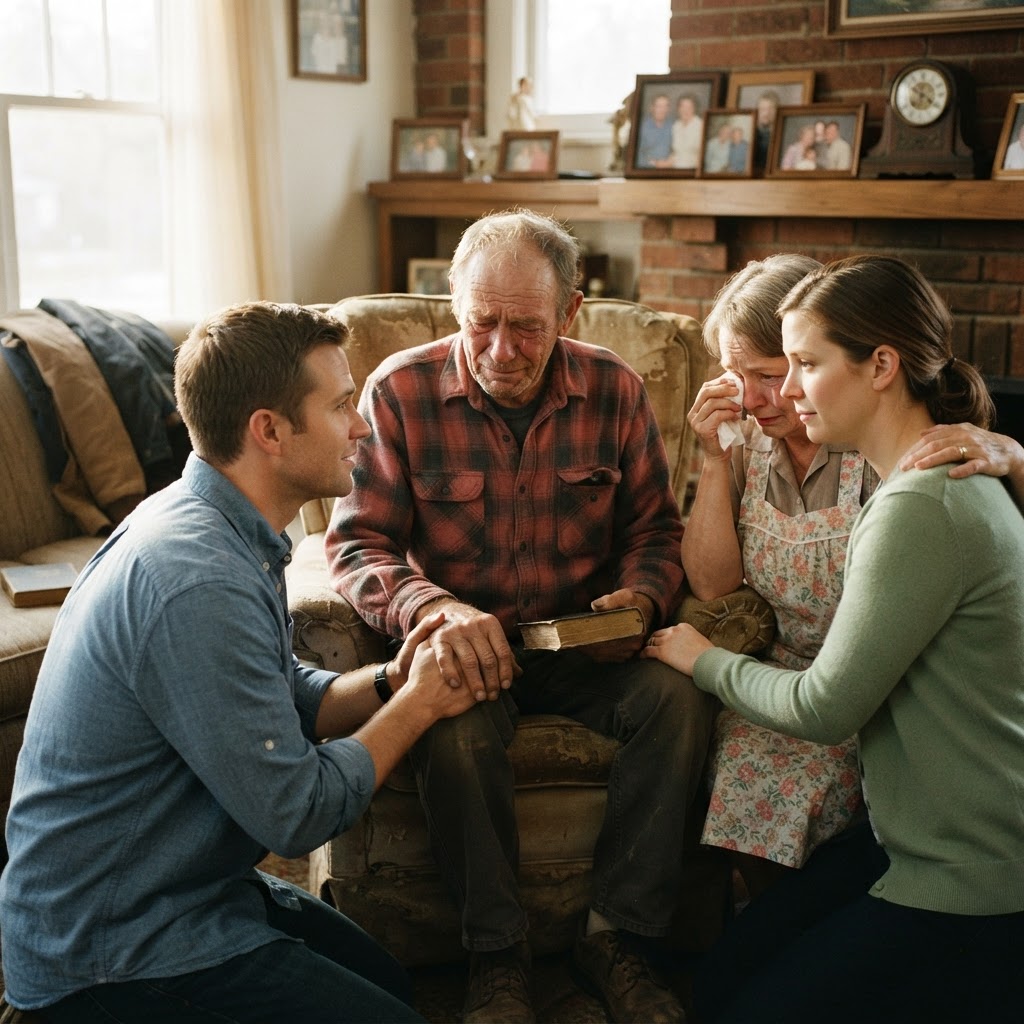
They sat together in Bob’s simple living room, surrounded by framed photos of grandchildren and antique clocks. Abe reached into his coat pocket and brought out a small notebook where he had written down the scriptures Edward had shared – Acts 17:11, 1 Peter 5:1–3, Ezekiel 34, 1 Timothy 2:5, and Galatians 5:22.
Abe knelt beside Bob’s armchair, taking the old machinist’s calloused, trembling hand in his own.
“Bob,” Abe said, his voice full of tender warmth and deep respect. “I want to tell you what God’s Word says about you. You are not a rebellious Christian. You are not a man lacking faith. You are a faithful, beloved son of Almighty God, and your forty years of labor and twenty years of humble service in the house of God are precious in the eyes of King Jesus.”
Abe read Ezekiel 34 and First Peter 5 aloud. As the inspired words filled the quiet living room, Bob’s stoic posture began to soften. His broad shoulders shook, and large, silent tears began to roll down his weathered, wrinkled cheeks.
“I thought… I thought God was angry with me, Abe,” Bob wept, his voice cracking with decades of stored-up heartache. “When Pastor Chad said I had a legalistic heart because my knees couldn’t stand… I went home and prayed all night on my knees, asking God why He had abandoned me.”
Allison knelt beside Betty, wrapping her arms around the old woman’s frail shoulders. “God never abandoned you, Betty. Jesus is your gentle Shepherd, and He holds you so very close to His heart.”
For three precious hours, they prayed together, opened the Bible, and cried tears of deep healing and mutual restoration. The heavy cloak of shame that had weighed Bob down was forever washed away by the sweet, cleansing water of God’s pure grace.
Within weeks, Cathy, Debra, and several other families from their small group gathered in Bob’s living room. They did not gather to gossip or tear down Sovereign Vision Fellowship; they gathered to read Scripture, sing simple hymns without stage lights, and rest in the sufficiency of Christ.
Six months later, the bright spring sun was shining through the high arched glass windows of a small, traditional chapel on a hill three miles outside town.
The chapel was modest and unpretentious; no strobe lights, no giant LED screens, no booming subwoofers, no dramatic smoke machines. In the center of the wooden platform stood a simple oak pulpit. Behind it stood Edward; not draped in theatrical flair, but standing humbly in a plain suit, his leather Bible open before him.
In the fourth pew sat Abe and Allison.
Abe wore a clean white shirt, his face relaxed, his dark eyes bright with deep, unshakable joy. Allison sat beside him, a wooden sketchbook on her lap filled with vibrant watercolor paintings of scripture verses; drawings of peaceful pastures, quiet waters, sturdy oak trees, and light shining in darkness. Her face was glowing with the unmistakable beauty of a restored soul.
Beside them sat Bob and Betty. Bob was leaning on his wooden cane, but his face was radiant with joy, his deep voice joining the congregation as they sang the timeless lines of the Twenty Third Psalm:
The Lord is my shepherd;
I shall not [a]want.
2 He makes me to lie down in [b]green pastures;
He leads me beside the [c]still waters.
3 He restores my soul;
He leads me in the paths of righteousness
For His name’s sake.
4 Yea, though I walk through the valley of the shadow of death,
I will fear no evil;
For You are with me;
Your rod and Your staff, they comfort me.
5 You prepare a table before me in the presence of my enemies;
You anoint my head with oil;
My cup runs over.
6 Surely goodness and mercy shall follow me
All the days of my life;
And I will [d]dwell in the house of the Lord
[e]Forever.

As the music faded into quiet reverence, Edward stepped up to the oak pulpit. He opened Holy Scripture to the Book of Ephesians and began to unpack the text line by line, verse by verse; exalting Jesus Christ, highlighting the unfathomable riches of His cross, and pouring out the sweet, nourishing milk of God’s Word upon the hungry flock.
Abe looked sideways at Allison. A tear of pure, heartwarming gratitude rolled down her cheek, catching the morning sunlight like a tiny diamond. She looked up at Abe, smiling with radiant joy, and squeezed his hand.
Abe looked back toward the pulpit, then glanced out the sunlit window at the rolling green fields stretching out beneath the clear blue sky.
He knew that the journey had been painful. He knew that stepping away from Sovereign Vision Fellowship had cost them tears, misunderstandings, and quiet grief. But as he sat there in that peaceful chapel, bathed in the quiet starlight of Christ’s presence, nourished by the pure preaching of the Gospel, and surrounded by a flock that loved one another in spirit and in truth, Abe knew in his deepest heart that they were home.
The Shepherd had brought His sheep to quiet waters. And his soul was restored.