
Your cart is currently empty!

Unawares: The Heavy Heart and the Spiritual Hangover
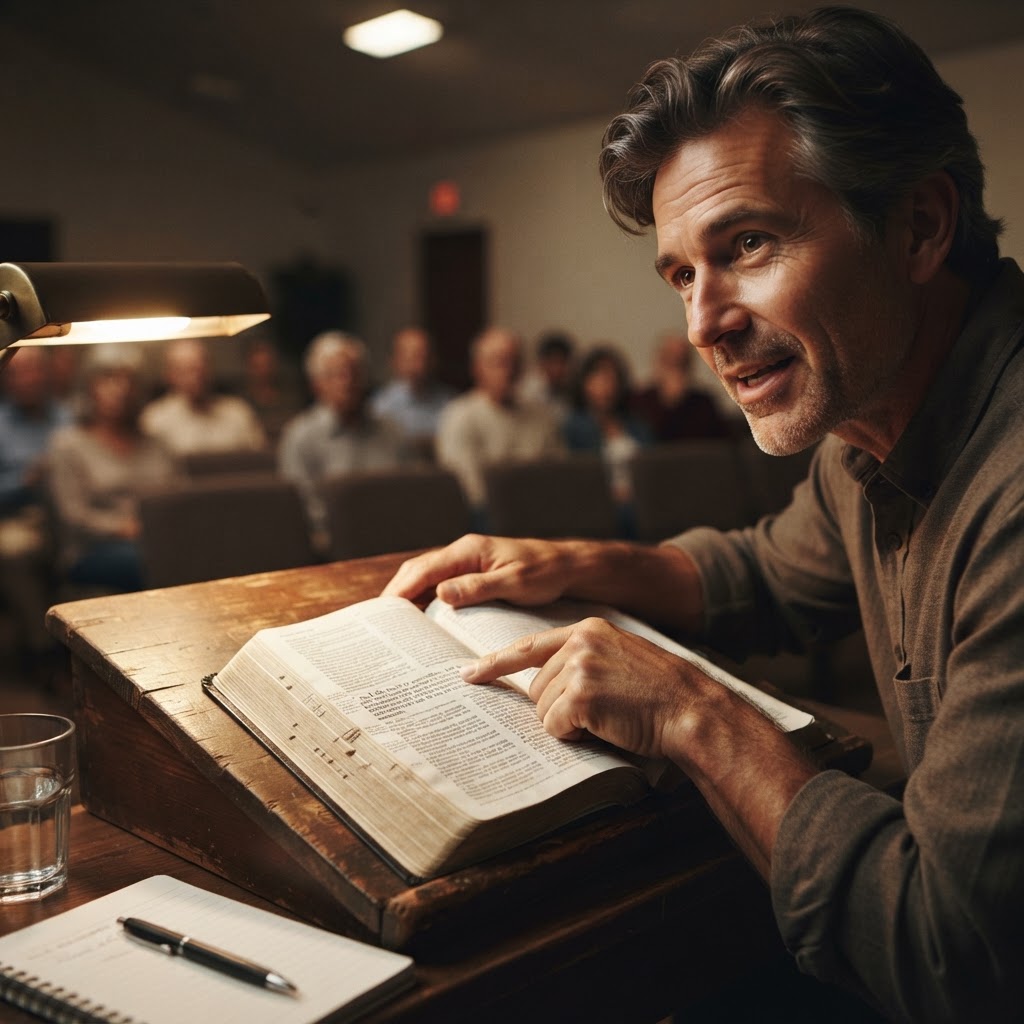
A Teaching from the Heart of a Teacher Who Loves You
The room settles the way a lake settles after the wind has passed; slowly, gratefully, as if the water itself is taking a breath. Bibles open like wings releasing. Somewhere a page turns, soft as a breath. A chair creaks. Someone’s pen rolls across a table and is caught, and even that small sound seems to matter tonight. The teacher stands; not to thunder, but to love; and waits, letting the quiet do its own kind of speaking. There is a holy weight in the air, the kind you can feel before a single word is spoken, the kind that says: Something is about to be planted here. Be ready to receive it.
Pastor Allen: “Good evening, beloved. Before we open the Book together, I need you to know why we’re here tonight.
I did not come to frighten you.
Let me say that again, slowly, so it can land in the place where fear likes to hide I am not here to frighten you. Not tonight. Not ever. Because what I am about to read can sound terrifying if you hear it without love; and I refuse to let you hear it that way. Love has a right to speak plainly. Love is not timid. Love does not tiptoe around the truth to spare your feelings and then leave you unprepared. No; love tells you what you need to know, and it tells you because it cannot bear the thought of you being hurt.
We are here because Jesus loves you enough to warn you.
Think about that for a moment. Let it sit on your heart like a warm hand. Think of a father walking the path with his child, and he sees a snake coiled in the grass just ahead. Does he whisper politely? Does he clear his throat and say, ‘Excuse me, little one, I wonder if you might consider the possibility of a serpent nearby’? Does he worry about seeming dramatic? Does he check his tone?
No.
He shouts. He grabs the child’s shoulder and yanks him back. He yells with the wild, holy urgency of love. His voice may even shake the child; but the child is alive, and that is the whole point. That is what love sounds like when it sees danger ahead and refuses to be polite about it.
Jesus shouts here. And what He shouts is love wearing a louder voice.”
The teacher leans forward, and the room leans with him. Somewhere in the back, a baby stirs and settles again. The quiet is not empty; it is full.
“Luke twenty-one, verse thirty-four:
‘And take heed to yourselves, lest at any time your hearts be overcharged with surfeiting, and drunkenness, and cares of this life, and so that day come upon you unawares.’
Now, take your pen. Underline those last five words. Put your finger on them. Say them with me, out loud, because there is power in a voice agreeing with the Spirit: ‘So that day come upon you unawares.’
That is the heart of tonight’s lesson. Everything else in this verse; the surfeiting, the drunkenness, the cares; that is the why. But those five words? Those five words are the danger. Keep them in front of you tonight like a lighthouse on a dark shore. We will return to them again and again, the way a ship returns to its true north. Because a ship that loses its north does not crash in the storm; it crashes in the calm, drifting, one degree at a time, until the shore it thought it knew is nowhere in sight.”

Part One: Seeing the Verse Plain
“Let me ask you something,” the teacher says, and the pen in his hand becomes a gentle pointer, turning slowly as he speaks. “When Jesus says, ‘And take heed to yourselves,’ what is the very first thing He is telling us to watch? Who is the first soul on the watch list?”
Eyes lift from Bibles. You can see the question moving through the room like a breeze through wheat. A young woman near the front; Rachel; speaks softly, almost surprised by her own answer:
“Ourselves.”
“That’s right. Yourselves. Not your neighbor. Not the government. Not the preacher. Not your spouse. Not the culture. Not the church down the street. The first soul on your watch list is your own.
‘Take heed to yourselves’ means setting a guard on your own heart. Because no one else can stand guard there for you. Your mama can’t stand guard there; though she has tried, bless her, and she will keep trying until the day she prays her last prayer over you, and that is a holy thing. Your pastor can’t stand guard there. Your small group can’t stand guard there. Your spouse can’t stand guard there, as much as they love you and long to protect you. That territory; the territory of your heart, that inner sanctuary where the Spirit of God wants to dwell; has only one lawful guard, and it is you, standing watch under the covering of the Holy Spirit. If you abandon that post, nobody else can take it. The enemy doesn’t need to break through your front door; he only needs to find the watchman asleep.
Now read the verse again with me. What three things does Jesus say can overcharge; or weigh down; the heart? Count them. Three weights.”
A voice from the back, a man named Marcus: “Surfeiting, drunkenness, and cares of this life.”
“Yes. One: surfeiting. Two: drunkenness. Three: cares of this life. Three weights, one heart. And notice; Jesus names them as a loving physician names symptoms before He reaches for the remedy. He is not shaming us. He is showing us.
Now let us name them honestly before we go any further. Surfeiting: we will spend good time there in a moment but hear this now; it is the hangover of the soul. Drunkenness is the dulling of the mind by anything that steals our senses, and I do not only mean wine. Anything that clouds your judgment, numbs your conscience, and silences the still, small voice qualifies. And the cares of this life; those are the worries, the bills, the burdens, the midnight rehearsals of every conversation you’ll never actually have, the 3 a.m. inventory of everything that could go wrong, the anxious math of a future you cannot control.
And here is what you need to see tonight, because it will set you free: those cares are not evil in themselves. Do you hear me? They can be perfectly legitimate. God gave you those children. He gave you that job. He knows you have bills. He sees the stack on your desk and the ache in your chest, and He is not disgusted with you. But they can crush us if we carry them without Him. The difference is not the size of the burden; the difference is whose shoulders it rests on.
Now notice something beautiful and terrible at the same time. All three of these weights do the same thing. They weigh the heart down so low that the soul cannot look up. The eyes that should be scanning the horizon for the Bridegroom are fixed on the mud beneath their feet. The ears that should be tuned to the trumpet are full of the noise of the marketplace.
Let me ask you the question that matters. What is the terrible result Jesus warns of? Finish the verse in your own words. What happens to a person whose heart is weighed down like this?”
A pause. The kind of pause where you can hear the Spirit moving, a hush like the moment before rain. Then an older woman; Elena; answers quietly, her voice barely above a whisper, as if she is confessing something holy:
“So that day come upon them unawares.”
“That’s it. Unawares.
Now hear me, church. It is not if that day comes. It will come. There is no question about the coming. The question is not on heaven’s calendar; it is settled there, written before the foundation of the world. The only question is whether you will be awake when it arrives, or asleep. The tragedy is not that the day comes. The tragedy is that it comes unawares. Suddenly. Unexpectedly. In a moment when you did not see it coming, because your eyes were down, and your heart was heavy, and your soul was full of everything except Him.
A day can be coming, and you can be ready. A day can be coming, and you can be caught. The difference is not the day. The difference is the watchman.”

Part Two: What Is “Surfeiting”? The Morning-After Picture
“That old word, surfeiting; it sounds like something pulled from the yellowed pages of a hundred-year-old dictionary, doesn’t it? Like a word that belongs in a leather chair with a monocle. But it comes from a Greek word, kraipalē; I want you to hear that word, kraipalē, let it roll around in your mouth; and in the old world, that word meant something very specific. Something physical. Something everyone in that culture recognized. I want you to guess. Think of the morning after a night of too much.”
Scattered replies ripple through the room. Someone laughs nervously; the laugh of recognition, not mockery. Someone says, “A hangover.”
“Yes. That is exactly it. The throbbing head. The queasy stomach. The light that hurts your eyes like an accusation. The mind wrapped in fog, moving slow as molasses. The dull, grinding regret that sits on the chest like a stone you didn’t ask for and can’t seem to move. The sour taste of a promise you made to yourself last night that you’ve already broken this morning.
Now hear this, because it will change how you read this verse forever: Jesus took that word; the drunkard’s morning-after, the word for a body reaping what excess has sown; and He used it for the soul.
This is what He is saying: you can be spiritually hungover.
You can wake up in your own life; wake up in your own body, in your own house, in your own church pew; and find that prayer feels far away, like a voice you used to recognize calling from across a wide river. The Bible feels thick and heavy in your hands, like a book written in a language you once knew and have somehow forgotten. The desire to seek God seems completely out of reach, as if the door to your own heart has been locked from the inside and you’ve misplaced the key. You look at your own reflection, and you don’t recognize the person staring back at you. That fog. That nausea of the spirit. That sense that God is a thousand miles off even though you are sitting in church, singing the songs, nodding at the sermon, and smiling at the people who have no idea what is happening inside you.
That is kraipalē of the soul. And you are not alone in it.”
The teacher sets down his pen and looks slowly across the room, letting the words do their tender work. His voice drops, and the room leans in like flowers toward the sun.
“Now here is the searching question, and I’m going to give you a minute with it. In what ways have you felt a spiritual hangover? A season when your soul felt nauseated. Foggy. Unable to think clearly about eternity. When worship felt like a language you used to speak, and now you only mumble along. What do you think filled your heart so full that the Spirit seemed far off? What did you drink from, and how much, and how often?”
A long silence. Then Marcus clears his throat, and his voice is honest in a way that makes the room love him instantly. “I think… my phone. I mean it, teacher. I really mean it. I’ll tell myself I’m just winding down; just checking, just scrolling, just five more minutes; and suddenly it’s two in the morning and I’ve watched forty videos and I feel… dirty. Not guilty, exactly. Just foggy. Empty. Like I poured a whole day into a sieve and watched it disappear. The next morning, I try to pray and there’s nothing there. Just static. Like a radio that can’t find the station.”
Rachel nods, and her eyes are bright. “For me it was a season of comparison. I was consuming other people’s highlight reels; everyone’s perfect kitchen, perfect marriage, perfect faith, perfect children; and I woke up hating my own life. Hating my own kitchen. Hating my own ordinary Tuesday. I couldn’t feel God because I was so full of everyone else’s life that there was no room left for my own, and no room left for Him.”
The teacher’s voice softens to something almost like a lullaby. “Thank you. Thank you for being honest. That took courage, and I honor it. And can I love on you for a second? A spiritual hangover is not an unforgivable sin. Did you hear me? It is not an unforgivable sin. It is not even a sin, necessarily; it is a signal. It is like the check-engine light on your dashboard. The Lord let you feel that fog so that you would pull over and ask Him for help. That is mercy, not judgment. A holy God who let you keep speeding toward the cliff without any warning would not be loving you. The fact that you feel the fog means He has not let you go. The fact that you feel sick means you’re still alive. Dead people don’t feel anything.”
A few people exhale, and you can feel the tension leave the room like a tide going out.
“Now the teaching tonight says the soul gets sick when we consume too much of this world’s entertainment, opinion, and vanity. And we live in an age of consumption like the world has never seen. Researchers tell us the average adult now spends hours and hours each day with their eyes on a screen; an entire workday’s worth of attention poured into a glowing rectangle. We carry the world’s trough in our pockets and dip our heads into it a hundred times a day, telling ourselves it’s just a quick drink. So, let me ask you directly: what are the specific things you have been consuming that leave you spiritually hungover? Name them. Bring them into the light. They lose their power in the light.”
People name things. Some laugh nervously; the laughter of freedom, almost. Some grow quiet, and that quiet is holy too. Someone confesses to a news feed that feeds on her peace, morning and night, like a wolf at the door. Someone else confesses to a grudge he replays like a favorite song, pressing repeat until the melody of it has worn a groove in his soul. Someone confesses to food. Someone confesses to work. Someone confesses to the endless, restless scroll of wanting more.
“I appreciate your honesty. More than that, I honor it. Now let me hold up a picture for you. A sponge.”
The teacher picks up a dry sponge from the table; he has carried it in for this very moment, and the room watches it as if it were a relic.
“A sponge so full of muddy water cannot receive one drop of clear water. It is physically impossible. The mud has to come out before the clear can go in. You can hold it under the tap all day, and the clear water will just run off its surface; because there is no room. The sponge is saturated.
That is the saturated mind.
When you sit down to pray and your mind is still scrolling through what you just watched, that is the sponge. When you open the Scripture and you feel a thickness in the air, a fog in your brain, that is the sponge. When the words on the page refuse to become words in your heart, that is the sponge. And here is the gentle rebuke I want to leave with you: you are not ‘busy.’ You are overfull. Busy is a calendar problem; overfull is a heart problem. And the heart problem is the one Jesus came to heal.”

Part Three: The Day Coming “Unawares”:
The Thief, the Flood, the Snare
“Now we come to the heart of the night. ‘So that day come upon you unawares.’
What does that word mean in plain talk? Have you ever been caught off guard? A knock at the door. A phone call. A bill. A storm. A diagnosis. Tell me what that felt like.”
A man in the middle row; David; raises a hand, and his voice is steady but heavy with memory. “Two years ago, I lost my job on a Tuesday morning. I’d had no warning at all. I walked in with my coffee and walked out with a box. I remember standing in the parking lot thinking… How did I not see this coming? I had every sign. I just didn’t want to look at them.”
“Yes. Unawares means suddenly. Unexpectedly. When you did not see it coming. And here is what makes it so serious: the Bible gives us three pictures of that day, and every single one of them is a surprise. Not one of them is announced. Not one of them sends a courtesy notice. Let us look at the first one. Turn with me to First Thessalonians, chapter five, verse two. Read it aloud with me:
‘For yourselves know perfectly that the day of the Lord so cometh as a thief in the night.’
There is the first picture. A thief. Now tell me; does a thief knock first? Does a thief send a text to let you know he’s on his way? ‘Hey, just letting you know I’ll be there around two a.m., please leave the door unlocked, and if you could turn off the porch light, that would be great.’”
Laughter ripples through the room like light on water. Even Elena smiles through her tears.
“No. A thief comes when the house is dark and the owner is asleep. He comes when no one is watching. Now look down at verse six: ‘Therefore let us not sleep, as do others; but let us watch and be sober.’
Here is what I want you to see. The cure for being caught by a thief is not more locks. It is awake. The man who is awake hears the footstep on the stair. The man who is asleep does not hear anything at all; not the footstep, not the creak of the floorboard, not the click of the lock. The house can be full of alarms, and a man in a deep sleep will sleep through every one of them. The tragedy of that day is never that it comes; it is that we are sleeping when it arrives.
Now the second picture. Turn to Matthew twenty-four, verse thirty-seven. Read it with me:
‘But as the days of Noe were, so shall also the coming of the Son of man be. For as in the days that were before the flood they were eating and drinking, marrying and giving in marriage, until the day that Noe entered into the ark, and knew not until the flood came, and took them all away.’
What were the people doing when the flood came? Look at the text. They were eating. Drinking. Marrying. Giving in marriage. Ordinary things. Holy things, even; marriage is a holy thing, a gift from God. And they knew not.
Now this is the one that should make us pause, because look at what they were not doing. They were not in a nightclub. They were not in a jail cell. They were not robbing banks or burning churches or cursing God. They were doing normal things. Meals. Weddings. Work. Family. The everyday machinery of a respectable life. The kind of life you would be proud to show your mother. The kind of life most of us are living right now.
And the flood came and took them all away.
Why? Because they were so full of ordinary life that they never once looked up. They never wondered about the ark. They never asked the old man why he was building a boat in the desert. They were too busy. Too full. Too comfortable. That is the danger of ‘cares of this life.’ Not that they are sinful. But they are loud. So loud they drown out the voice of God. So loud that when the alarm sounds they cannot hear it, because their hearts are full of the noise of a normal Monday.”
A stillness settles over the room. Elena wipes her eye, and no one pretends not to see. It is a holy thing, to be seen in your tears and loved anyway.
“And then; right after our verse, Luke twenty-one, verse thirty-five; Jesus gives the third picture:
‘For as a snare shall it come on all them that dwell on the face of the whole earth.’
What is a snare? How does a bird get caught in a trap? The bird never sees the snare. Why? Because its head is down, busy with the bait. It is pecking at the seed, perfectly content, utterly focused on the small pleasure right in front of its beak; and snap. The day of the Lord will spring on the world just like that. No warning. No shadow falling first. No second chance to lift its head.
But here is the beautiful part. Watch this. The verse says the snare comes on ‘all them that dwell on the face of the whole earth’; the world. But Jesus has already told His people how to escape. Look at verse thirty-six: ‘Watch ye therefore, and pray always, that ye may be accounted worthy to escape all these things.’
Do you see it? The world gets the snare. The watching, praying child of God gets the escape. The bird with its head down gets caught. The bird that hears the grass move, lifts its head, and flies; that bird lives. The same trap, the same grass, the same moment. The only difference is the lifted head.
Now, before we leave this picture, think with me about Lot’s wife. Genesis nineteen, verse twenty-six: ‘But his wife looked back behind him, and she became a pillar of salt.’ Why do you think the angels told Lot and his family, ‘Escape for thy life; look not behind thee’? What does looking back have to do with being caught unawares?”
A thoughtful silence. Then Rachel speaks again, slowly, as if turning a key in a lock: “She looked back because her heart was still in Sodom. Her treasure was behind her. Her body was leaving, but her heart never left.”
“Yes. Her treasure was behind her. Jesus said in Matthew twenty-four, verse eighteen: ‘Neither let him which is in the field return back to take his clothes.’ Do you know what that means? The person who is ready doesn’t need to pack. The person who is ready is loose; not tied down by the things of this life. Not bound to the house, the field, the wardrobe, the accounts. Ready people travel light. It is the person who is not ready who needs to go back for one more thing, and one more thing, and one more thing.
The weighed-down heart is always looking back. The watchful heart is always looking up. Which one is yours tonight? Not which one do you want it to be. Which one is it, honestly, in the quiet when no one is watching?”
Part Four: The Cares of This Life: The Sneakiest Weight
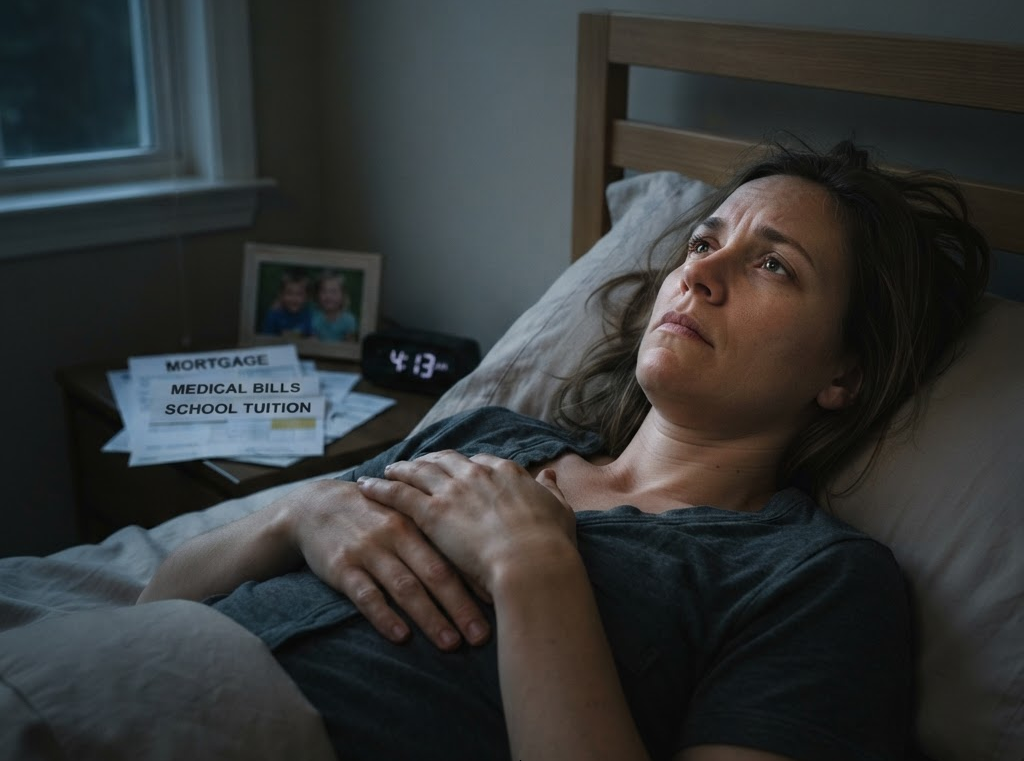
“Now, some of you are sitting there thinking, ‘Teacher, I don’t drink. I don’t party. I don’t scroll all night.’ I believe you. Truly, I do. But Jesus named a third weight; and I think it is the sneakiest one of all: ‘cares of this life.’
So let me ask you plainly. What are the cares of your life right now? The bills. The health. The children. The job. The marriage. The aging parents. The wayward son. The thing you can’t fix and can’t stop thinking about. The future you’re trying to build with your own two hands because you’re not sure you can trust anyone else with it.
Raise your hand if you have ever gone to bed with your worries and woken up with them still sitting on your chest, like a cat that has decided it owns the bed. Go ahead. Don’t be shy. I see those hands. I see them.”
The teacher scans the room with tenderness, and nearly every hand is lifted, trembling slightly, like leaves in the wind. Some are lifted slowly, as if admitting something shameful. Some are lifted with a relieved laugh. All of them are lifted.
“Now let me gently remind you of something, because I want this to land on you like balm, not like a whip. The Lord does not scold us for having responsibilities. Did you hear that? He gave you those children. He gave you that job. He knows you have bills. He counted the hairs on your head, and He counted the zeros in your ledger, and He is not angry that you have cares. He is not disgusted by your anxiety. He scolds us for carrying them without Him. That is the whole difference. It was never the burden that was the problem. It was the lone shoulders.
Romans thirteen, verse eleven says: ‘And that, knowing the time, that now it is high time to awake out of sleep.’ The cares are not the sin. The sleep is the danger. A man can drown in shallow water if he falls asleep in it. You don’t need a deep ocean to drown. You just need to be asleep in ankle-deep water. The water doesn’t have to be deep to take you; it just has to find you unconscious.
So, tell me; what is the difference between being busy and being surfeited? A busy man has much to do. What does a surfeited man have too much of?”
David answers from the middle row, slowly, like a man discovering the answer as he speaks it: “Too much inside him. His heart is overfull.”
“That’s right. Too much inside him.
Here is the difference, and I want you to write this down, because it will save you years of confusion: Busy is about the calendar. Surfeited is about the heart. A man can have an empty calendar and a full, sick heart; full of the world’s noise, the world’s opinions, the world’s mirror. And a man can have a full calendar and a light heart, if he has given his burdens to the Lord. It is not how much you carry. It is what is inside you.
The psalmist knew this. He wrote in Psalm one hundred twenty-one, ‘I will lift up my eyes unto the hills, from whence cometh my help. My help cometh from the LORD.’ The lifted eyes are the cure for the weighed-down heart. And the Lord said through Isaiah, ‘Thou wilt keep him in perfect peace, whose mind is stayed on thee.’ Did you catch that? Not the mind that is free of trouble; the mind that is stayed on Him in the middle of trouble. The word stayed means anchored, fixed, held fast. The storm can rage; the anchor does not move. And Peter echoes it in his first letter, writing to people who were actually being persecuted, not to people with easy lives: ‘Casting all your care upon him; for He careth for you.’
Did you hear that last phrase? He careth for you. The same word. Your cares are invited to become His cares. He is not too busy for them. He is not annoyed by them. He is not embarrassed by them. He is waiting for them. He has been waiting all along. The only reason you are still carrying them is that you haven’t handed them over yet. And can I tell you something? He will not wrench them from your hands. He is a gentleman. He waits to be asked. But oh, how He waits.”

Part Five: The Cure; Watch and Pray, Be Sober, Be Ready
“Now, praise God, Jesus never gives a warning without a way out. Never. Our God does not show you the cliff and then walk away, leaving you to figure it out in the dark. He shows you the cliff, and then He builds you a bridge. He doesn’t just tell you the disease; He hands you the medicine. He doesn’t just name the snare; He teaches you to lift your head.
Read Luke twenty-one, verse thirty-six with me:
‘Watch ye therefore, and pray always, that ye may be accounted worthy to escape all these things that shall come to pass, and to stand before the Son of man.’
There it is. Two things. What are the two things Jesus commands us to do so that day does not catch us unawares?”
The room answers as one voice, a chorus of hearts agreeing: “Watch. And pray.”
“Watch. And pray.
Let me tell you what each one does. The watch keeps the thief out. It keeps your eyes open, your heart on guard, your head out of the world’s trough. The watch is the sentinel on the wall who does not get distracted by the lights of the city below. And the pray keeps your heart full of the Spirit. Ephesians five, verse eighteen puts it this way: ‘And be not drunk with wine, wherein is excess; but be filled with the Spirit.’
Do you see the contrast? The world offers a drunk that leaves you hungover. The Spirit offers a filling that leaves you awake. The world’s filling ends in a headache and regret and a promise you can’t keep. The Spirit’s filling ends in joy and clarity and a peace that doesn’t depend on circumstances. You get to choose which cup you drink from. You get to choose, every morning, every evening, every moment. Nobody can choose for you.
Now turn with me to First Peter five, verse eight: ‘Be sober, be vigilant; because your adversary the devil, as a roaring lion, walketh about, seeking whom he may devour.’
When does a lion catch a sheep? When the sheep is watching, or when the sheep is drowsy? When it is grazing with its head down, content, unaware, alone. The lion does not announce himself. He doesn’t roar before he pounces; that would ruin the whole meal. The roar comes after, when it’s too late for the sheep. He waits for the sheep that is unaware. That word sober in this verse is the same family as our verse tonight. It means not drugged. Not fogged. Not hungover. It means clear-headed, sharp-eyed, ready.
A sober sheep hears the grass move. A hungover sheep doesn’t hear anything but its own headache.
Which sheep are you tonight? Not which sheep do you want to be. Which one are you, in the honest light of the Spirit? Because He already knows. And He is not asking to shame you. He is asking to heal you.”
The teacher’s voice softens. The room grows still as a held breath, and in that stillness the Spirit is palpable, like a warm wind through an open window.
“Now let me ask you straight, as one beloved to another. Not as a preacher to a congregation. As a brother in Christ; or a friend, if you need a friend tonight; who has stood exactly where you are standing. I have known the fog. I have known the nausea of a soul that ate too much of the world. I have known what it is to wake up and not recognize the man in my own mirror. I have known what it is to sit in a pew with a Bible open and a heart closed, and to wonder if God was still there. So, I ask you not from above, but from beside. From the same mud, the same grass, the same temptation.
Tonight, what is the one thing you know you need to put down? The feed. The show. The grudge. The worry. The mirror. The comparison. The midnight scroll. What is the one thing that has your head down, busy with the bait, so that your heart is too heavy to look up?
I’m going to give you thirty seconds of silence. Just you and the Lord. And I want you to answer Him honestly. He already knows. He is just waiting for you to say it; out loud, or in the quiet of your own heart, which is a place He visits more often than you think.”
Thirty seconds of holy silence. The Spirit moves in the quiet like wind through a field. Someone begins to weep softly, and the tears are not sorrow; they are the first rain after a long drought. Someone else is still. Someone else is whispering. The silence is not empty; it is the fullest thing in the room.
“Okay. Now, what is the one change you will make this week to take heed to your own heart? Not your spouse’s heart. Not your children’s heart. Not your neighbor’s heart. Your own. Proverbs four, verse twenty-three: ‘Keep thy heart with all diligence; for out of it are the issues of life.’
What is your first step? Not your good intention. Your first step. Because intention without a step is just a nice thought that dies on Tuesday. Intention is a seed that never touches soil. A step is a seed planted in the ground. Which will you be this week?”
Marcus speaks first, his voice rough with honesty, the kind of honesty that costs something: “I’m going to leave my phone in the kitchen when I go to bed. And I’m going to pray before I pick it up in the morning. I’m going to let the Lord have the first word before the world gets a vote.”
Rachel: “I’m going to unfollow the accounts that make me feel like my life is a failure, and I’m going to spend that time reading one chapter of Proverbs a day. I want to be full of wisdom instead of full of comparison.”
Elena, still wiping her eyes, her voice finding strength in the telling: “I’m going to write my worries on paper and literally hand them to the Lord. Every night. I’ve been carrying them for so long I forgot they were His to carry. I forgot I was never meant to carry them at all.”
David: “I’m going to start my day with the Psalms instead of the news. I need my heart full of heaven before the world gets a vote. I lost a job once because I didn’t see it coming. I don’t want to lose my soul the same way.”
The teacher prays over each one, laying a hand on a shoulder, speaking quiet words of blessing; words meant only for that ear, that heart, that moment. And the room is thick with the presence of the Holy Spirit; the kind of presence you can feel on your skin, like a warm wind through an open window, like a hand on your shoulder when no one is there.

The Closing Picture
let me leave you with this.
A man once went to bed after a long, heavy day. Full stomach. Full mind. Full of worry. He had eaten too much, drunk too much, thought too much. And he slept the sleep of the weary; the heavy sleep, the sleep that is more like falling than resting. In the middle of the night, a fire broke out in his house. The smoke alarms sounded; loud, piercing, urgent. The kind of sound designed to wake the dead. But he did not hear them, because his sleep was so heavy. His neighbors broke down the door and dragged him out. And he stood on the lawn in the cold, watching everything he owned burn to the ground.

He never heard a single alarm.
That, beloved, is what ‘so that day come upon you unawares’ means. Not that the day didn’t come; it came. Not that there was no warning; the warning was in this very Book, spoken by Jesus Himself, with tears in His voice and love in His eyes. It means the heart was so weighed down; with surfeiting, with drunkenness, with cares of this life; that when the alarm sounded, the soul was too heavy to hear it. The alarm was loud enough. The heart was just too full.
But listen to the good news. Are you listening? The same Jesus who warns us is the same Jesus who saves us. He does not want you caught off guard. He has told you the hour is unknown. He has also told you to be ready. And being ready is not complicated. It is not a thousand-step program. It is not a twelve-week course. It is simply this: a heart that is not weighed down. A mind that is not fogged. Eyes that are looking up.
The psalmist said, ‘I will lift up my eyes.’ The watchman lifts his eyes. The bride lifts her eyes. The child who hears his Father’s voice lifts his eyes. And when that day comes; and it will come, as surely as the sun is setting tonight; the one whose eyes are already lifted will be the one who sees Him first. The one who sees Him first will be the one who is ready. And the one who is ready will hear those words that make every alarm worth it: ‘Well done, thou good and faithful servant.’

So tonight, as you drive home, let this be your prayer.
It is the last verse of our passage:
‘Watch ye therefore, and pray always, that ye may be accounted worthy to escape all these things that shall come to pass, and to stand before the Son of man.’; (Luke 21:36).”
The teacher bows his head. The room follows, a field of bowed wheat before the wind. The only sound is the soft breath of people praying, the only movement the gentle sway of hearts being healed.
“Father, we thank You that You love us enough to warn us. Forgive us for the nights we have overindulged in the world’s noise and woken up spiritually hungover. Forgive us for the times we have carried burdens You never asked us to carry, and for the times we have slept through alarms You set for our own safety. Cleanse our hearts tonight. Lift the weights; the surfeiting, the drunkenness, the cares. We hand them to You now, all of them, the ones we’ve named and the ones too tender to name. Give us sober, watchful, praying hearts. We do not want that day to catch us unawares. We want to be found watching. We want to be found ready. We want to be found standing before Your Son, not scrambling to pack, not looking back, but looking up; looking for Him, the way a bride looks for the groom at the window. Fill us afresh with Your Spirit, we pray; not with the world’s fog, but with heaven’s clarity. Not with the hangover of excess, but with the joy of Your presence. In Jesus’ name. Amen.”
The room lifts. Eyes meet eyes, and there is a new tenderness in them; the look of people who have just been told the truth and loved at the same time, which is the rarest gift one human being can give another. The truth without love is a hammer. The love without truth is a pillow. But truth and love together? That is the gospel. That is what He did on the cross. That is what He is still doing tonight.
“Go in peace, beloved. Keep your heart. Lift your eyes. He is coming; and you will be ready. Not because you are strong enough. Because He who began a good work in you is faithful to complete it, and the same Jesus who warned you is the same Jesus who will carry you home. Go, and let the fog lift. Go, and let the weights fall. Go, and watch.”

Even so, come, Lord Jesus.