
Your cart is currently empty!

The Hearth of Blackwood Ridge
The Vine and the Branch
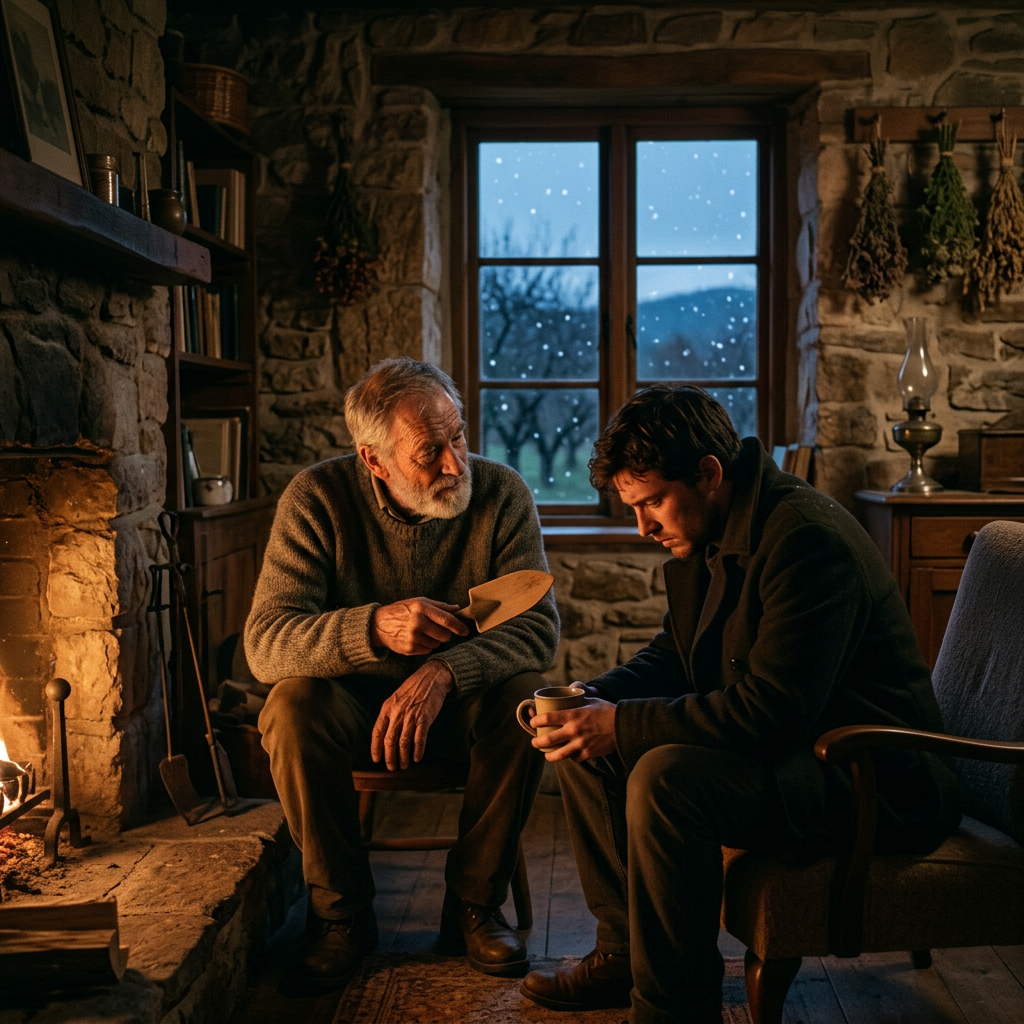
The wind howled across Blackwood Ridge with a predatory hunger, rattling the windowpanes of the small stone cottage that sat perched on the edge of the valley. Inside, the air smelled of dried lavender, old cedar, and the faint, sharp tang of woodsmoke.
Silas, a man whose face was a map of seasons spent under the sun and knees calloused by hours upon the floor, sat by the hearth. He wasn’t looking at the fire; he was looking at the young man sitting across from him.
Elias was twenty-four, but his eyes looked a century old. He sat with his shoulders hunched, his coat still buttoned to the chin, as if the cold of the mountain had managed to seep into his very marrow. He had come to Silas a week ago, a “coal” that had rolled far from the fire, graying at the edges and hard with the ash of disappointment.
“I don’t think I can do it, Silas,” Elias whispered, his voice barely audible over the gale outside. “I try to be what the scriptures say. I try to be ‘good.’ But the harder I try to grow, the more I feel like a plastic flower. There’s no life in me.”
Silas leaned forward, his eyes Kindling with a gentle, fierce light. He reached out and picked up a small, hand-carved wooden trowel from the side table.
“Elias, look at this,” Silas said. “I am a gardener. I’ve spent forty years coaxing life out of the stubborn soil of this Ridge. But do you know what I’ve never done? I have never once manufactured a rose. I can’t. I can dig the trench, I can pull the weed, and I can carry the water, but I cannot command the sap to rise. Only the Breath of God does that.”
He stood up and gestured toward the window, where the dark silhouettes of the orchard stood against the snow. “John 15:5 tells us, ‘I am the vine, you are the branches: He that abides in me, and I in him, the same bringeth forth much fruit: for without me ye can do nothing.’ You are trying to be the Vine, Elias. But you are just a branch. Your only job is to stay connected.”

The Diver’s Breath
The next morning, the storm had passed, leaving a world of blinding, crystalline white. Silas led Elias down to the edge of the frozen pond at the base of the property.
“Imagine,” Silas said, pointing to the dark, freezing water beneath the ice. “Imagine a diver submerged in the crushing depths of a midnight sea. Above him is the sun; around him is the cold, suffocating pressure of the deep. His life depends entirely on one thing: that slender, umbilical hose connecting him to the surface.”
Elias watched the old man, puzzled.
“That is Prayer,” Silas said firmly. “Most people think prayer is a religious chore, like doing the dishes. It isn’t. It is the oxygen of the New Man. When you neglect it, or when pride kinks that hose because you think you can hold your breath long enough to finish the job yourself, you start to die. You don’t drown because the sea is evil; you drown because you cut off the atmosphere of Heaven.”
Silas gripped Elias’s shoulder. “I want you to hear something.”
Silas closed his eyes right there in the snow. His voice changed; it became deeper, resonant, like a son speaking to a beloved Father. “Lord, here is Elias. My brother. Your son. I thank You that his name is carved upon Your palms. I ask You to blow the Breath of Life into his lungs this hour. Don’t let the enemy steal his peace.”
Elias felt a strange heat prickle behind his eyes. He had heard sermons before, but he had never heard a man mention his name to the King of Glory with such casual, terrifying intimacy.
“1 Samuel 12:23 says, ‘Moreover as for me, God forbid that I should sin against the Lord in ceasing to pray for you,’” Silas whispered as he opened his eyes. “I am not just teaching you, Elias. I am breathing for you until you learn to use the hose yourself.”
The Hearth of the Living Stones
By the middle of the week, Elias had begun to pray, but he remained reclusive. He stayed in the guest room, reading, avoiding the town. He felt safe with Silas, but the thought of “The Church” made him recoil. He had been burned by “the Body” before; gossip, cold looks, the feeling of being a specimen under a microscope.
Silas didn’t argue. Instead, he invited three people over for dinner.
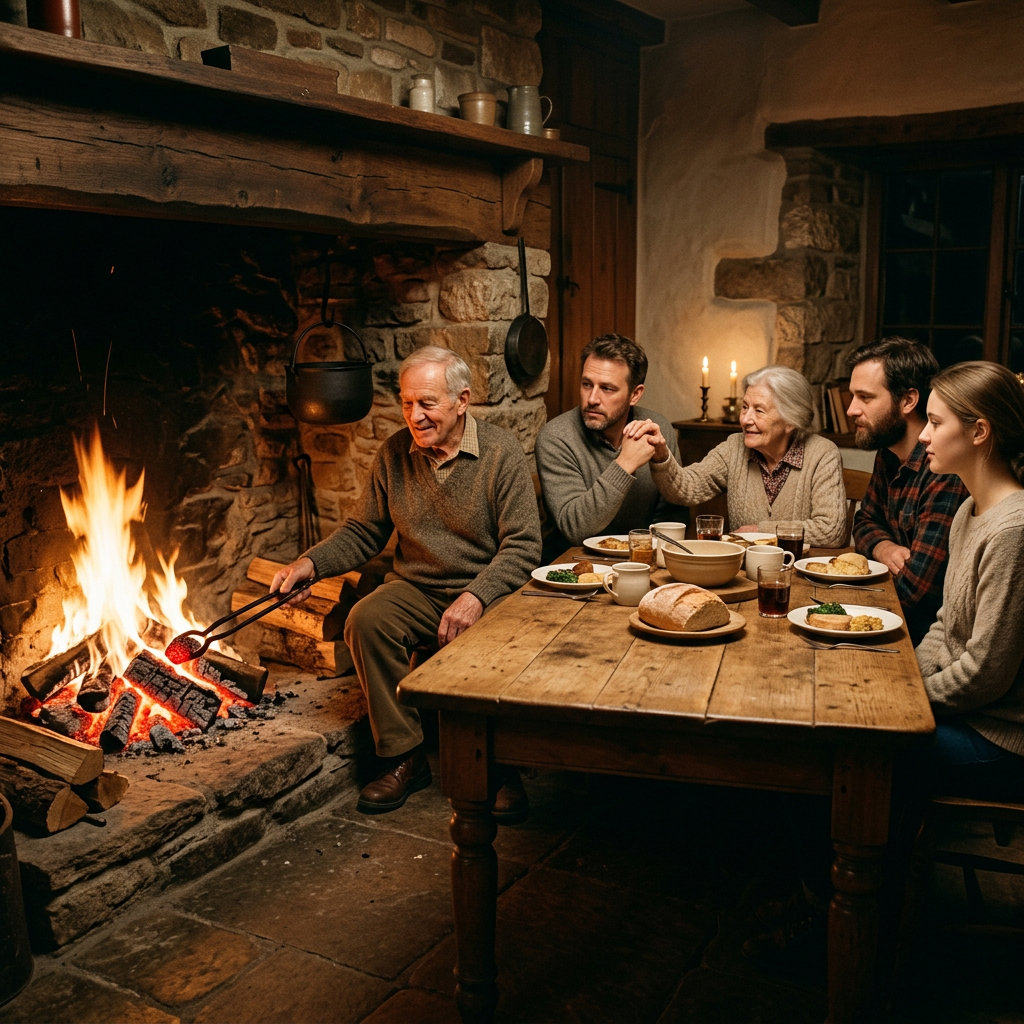
There was Martha, a woman whose hands were gnarled by arthritis, but whose kitchen was a perpetual fountain of soup for the poor. There was Thomas, a quiet man who spent his weekends fixing the roofs of widows. And there was Sarah, a young woman who had recently walked out of a life of addiction into the light of Grace.
As they sat around the large oak table, the fireplace roared. Silas took a pair of iron tongs. He reached into the heart of the fire and pulled out a single, glowing red coal. He set it alone on the stone hearth.
At first, the coal glowed with a fierce, red defiance. But as the minutes passed, the edges turned grey. The glow retreated to the center. The heat vanished.
“Look at it,” Silas said quietly. “It is still a coal by nature. It hasn’t changed its essence. But it has lost its purpose because it lost its connection. It’s becoming a cold, hard stone of ash.”
He pushed the coal back into the pile. Almost instantly, the other coals whispered their warmth back into it. The grey ash fell away, and it began to glow a vibrant, healthy crimson once more.
“The Holy Spirit does not inhabit isolated islands, Elias,” Silas said. “He inhabits a Temple built of ‘living stones’ joined together. Hebrews 10:25 warns us against ‘forsaking the assembling of ourselves together.’ You think you are protecting yourself by staying alone, but you are actually freezing to death.”
Martha reached across the table and placed her hand over Elias’s. “We aren’t a social club, son,” she said, her eyes twinkling. “We’re a hospital. And sometimes we’re a fortress. But mostly, we’re just the hearth where the King keeps His fire.”
The Danger of the Shadow
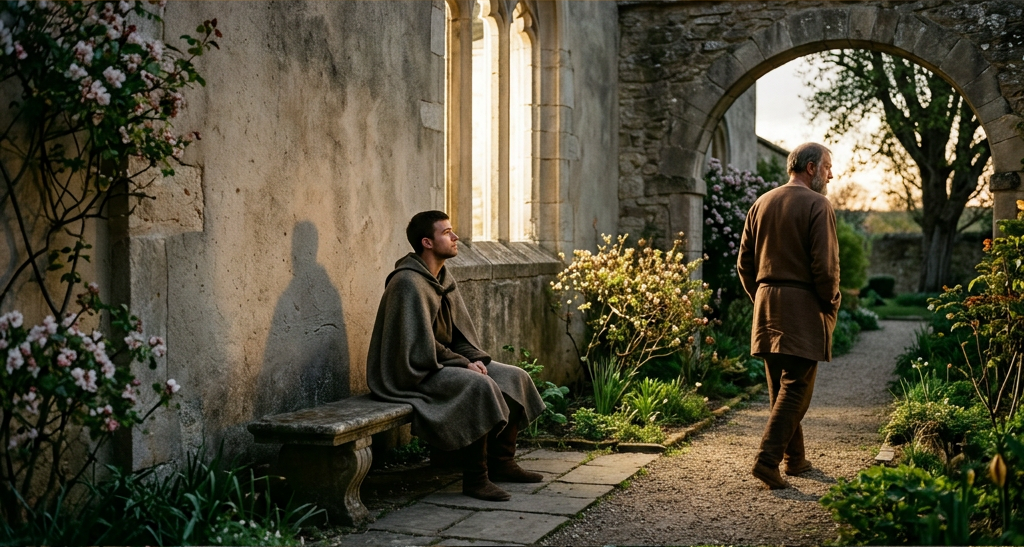
As the weeks turned into a month, Elias began to thrive. He followed Silas everywhere. He imitated Silas’s walk, Silas’s way of speaking, and Silas’s way of praying. He had become Silas’s shadow.
One afternoon, Silas sat Elias down in the garden, which was beginning to show the first green tongues of spring.
“Elias, I have a confession,” Silas said, his voice uncharacteristically stern. “I have failed you.”
Elias blanched. “What? How? You saved my life!”
“No,” Silas said. “And that is the problem. There is a subtle, sugary pride that can seep into ministry. If you only hear God through my ears, I haven’t birthed a follower of Jesus; I’ve created a clone of myself.”
He pointed to the sun. “John the Baptist said he must decrease so that Christ could increase. Paul asked in 1 Corinthians 3:5, ‘Who then is Paul, and “who is Apollos, but ministers by whom ye believed?’ I am the midwife, Elias, not the Father. It is time I weaned you from my milk so you can feast at the Table of the Body for yourself.”
Silas stood up and walked away, leaving Elias alone in the garden. For the first time, Elias didn’t feel abandoned. He felt the weight of a direct connection. He looked at the sky and realized that Silas wasn’t the source of the light; he was just a window. And the window was stepping aside so the sun could hit the floor.
The Royal Identity
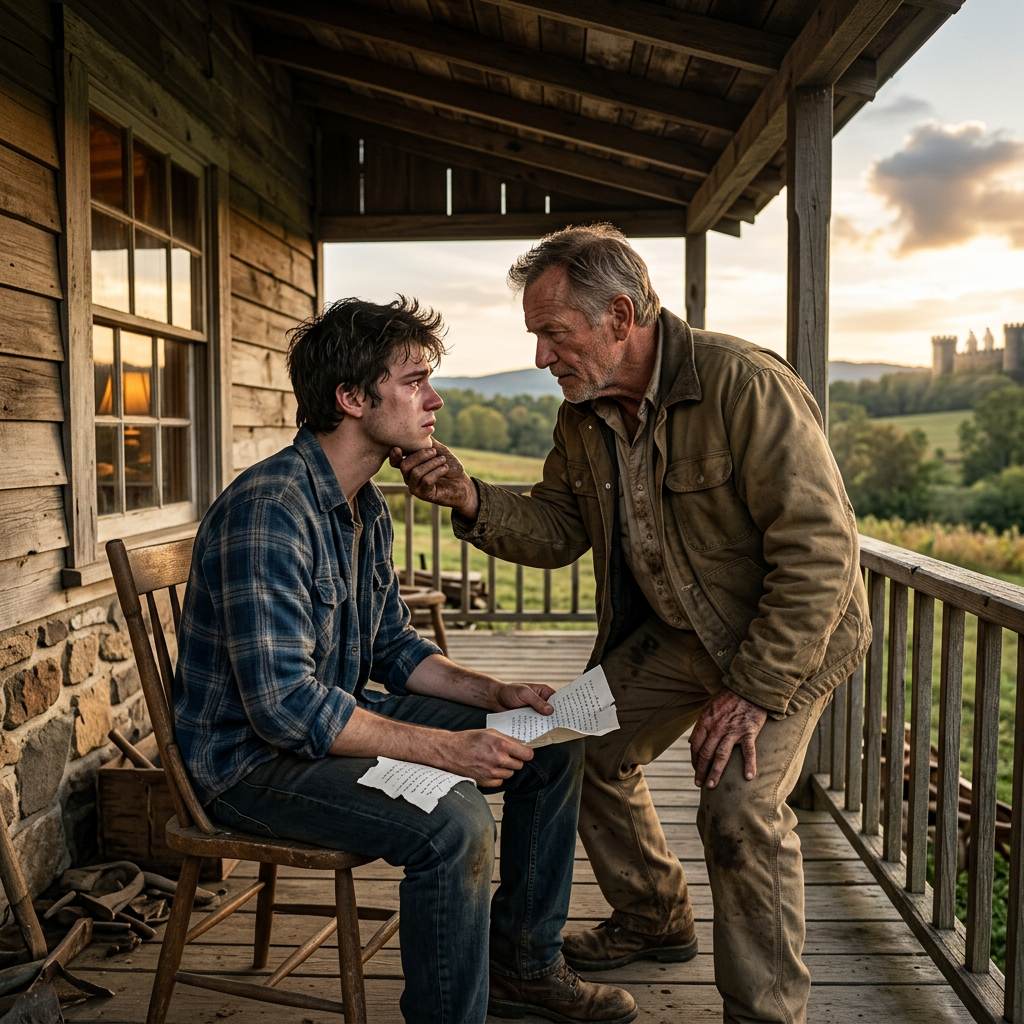
The final test came when a letter arrived from Elias’s past; a stinging reminder of his failures, a debt he couldn’t pay, and words from a father who had disowned him. Elias sat on the porch, the letter trembling in his hand, the old shroud of shame beginning to settle over his shoulders.
Silas walked out and saw the boy’s chin sinking toward his chest. He didn’t offer a platitude. He walked over and, with his rough, soil-stained fingers, he gently lifted Elias’s chin until their eyes met.
“Lift your head, Prince,” Silas said.
“I’m no prince,” Elias spat. “You read the letter. I’m a failure.”
“The letter is a lie from the pit,” Silas countered. “Listen to the King’s Version of your life. 1 Peter 2:9 says: ‘But ye are a chosen generation, a royal priesthood, a holy nation, a peculiar people.’”
Silas leaned in close. “You are not an orphan wandering the streets of Blackwood Ridge. You are a Prince of the Blood. You belong to a lineage of martyrs, prophets, and overcomers. Right now, Elias, there is a cloud of witnesses leaning over the battlements of Heaven, shouting your name in triumph! You are never, ever alone!”
Elias took a deep breath. The “umbilical hose” of prayer felt wide open. The “warmth of the hearth” from Martha and Thomas felt like a shield around him. He tore the letter in half.
The Harvest
A year later, a new young man arrived at Blackwood Ridge. He was cold, grey at the edges, and hard with ash.
Silas was there to meet him, but he didn’t do the talking. He stood back, a joyful gardener watching his orchard.
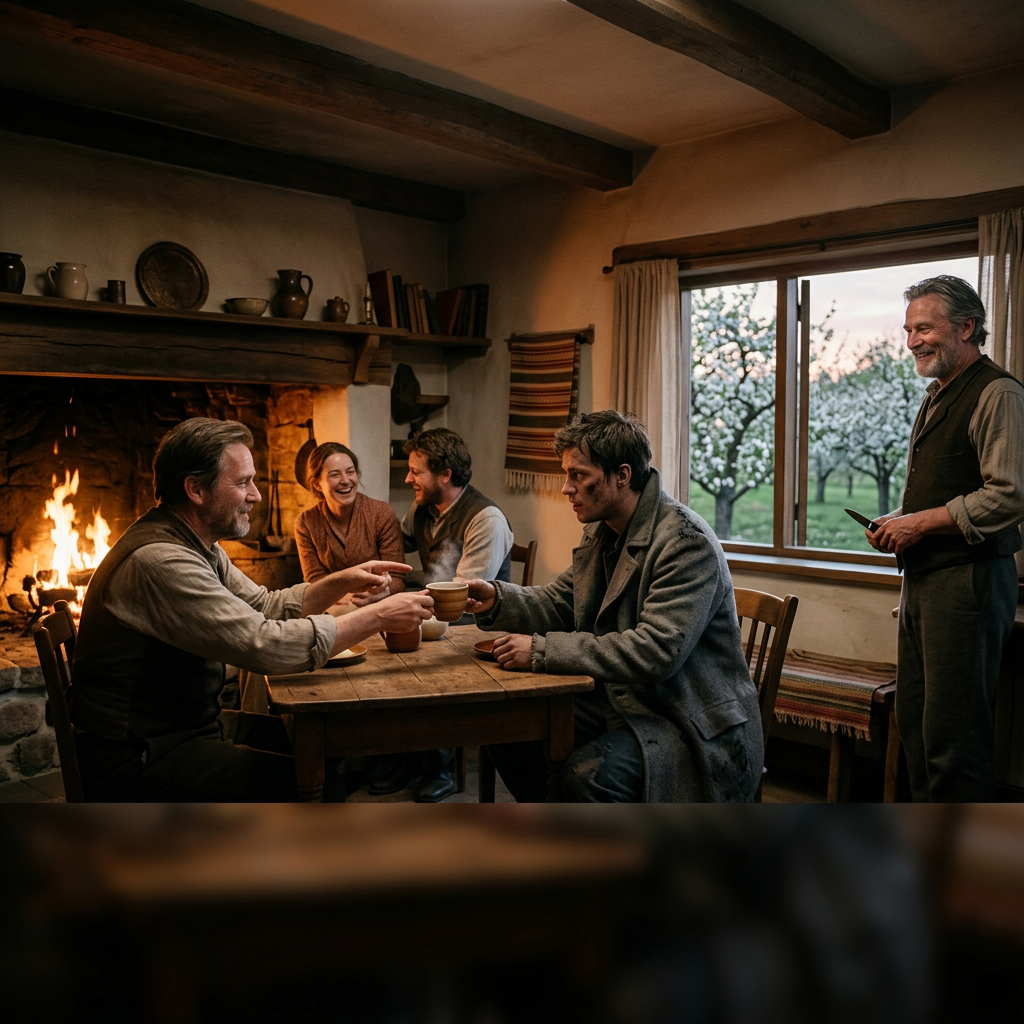
Elias walked up to the newcomer. He didn’t hand him a book or a list of rules. He handed him a cup of hot tea and pointed to the fireplace where Martha and Thomas were laughing.
“Come in,” Elias said, his voice steady and full of grace. “You look like a coal that’s rolled a bit too far. Come sit by the hearth. We’ve been praying for you by name.”
As the two young men sat down, Silas looked out at his garden. The apple trees were in full bloom, their white petals like a drift of heavenly snow. He whispered the words of 1 Peter 5:10:
“But the God of all grace, who hath called us unto his eternal glory by Christ Jesus, after that ye have suffered a while, make you perfect, stablish, strengthen, settle you.”
Silas smiled. The seed had been sown. The Body was breathing. And the Lord was giving the increase.
Amen.