

Your cart is currently empty!

“When Heaven Calls” Part I: Ordinary Dawn Chapter 4
Go to Chapter – introduction, 1, 2, 3, 4, 5, 6, 7, 8, 9, 10, 11, 12, 13, 14, 15, 16, 17, 18, 19, 20.
Chapter 4: Twilight of the Treaty
In the heart of a bustling city, within the modest walls of his apartment, Michael Turner felt the weight of the world pressing upon him. The television buzzed with a persistent hum, its screen alive with images that bore witness to a momentous occasion. Dignitaries clad in tailored suits gathered beneath the majestic marble colonnade of the United Nations, their hands clasped in unity as they signed a long-anticipated accord. A bold ticker scrolled beneath them, declaring, “Historic Global Peace & Sustainability Pact Ratified by 195 Nations.” The anchor’s voice, laced with cautious triumph, resonated in the room: “Experts hail this as the most comprehensive blueprint for worldwide cooperation, covering climate stewardship, economic integration, and a universal biometric digital ID.” The screen flickered with jubilant handshakes, illuminated by dazzling floodlights, while social media erupted in a cacophony of comments, exuberant cheers for unity mingled with anxious warnings about centralized control, and fervent conspiracy theories likened the treaty to the rise of the “man of lawlessness” (2 Thessalonians 2:3–4).
Michael closed his laptop with a sharp exhale, a rush of conflicting emotions swirling within him. For weeks, he had pursued this story, convinced he would uncover the ominous threads hidden beneath each clause. Yet now, as he gazed at the signed pages of the covenant, a tremor of urgency stirred in his heart, not merely as a journalist chasing the latest headline but as a man awakening to a deeper truth that beckoned him. He recalled the haunting words of Daniel’s prophecy: “He will make a strong covenant with many for one ‘seven’” (Daniel 9:27). And the foreboding warning from Revelation echoed in his mind: “No one can buy or sell unless he has the mark” (Revelation 13:17). Were these mere allegories of power plays, or was he on the precipice of a divine narrative weaving through the tapestry of history?
Meanwhile, across town, Sarah Reeves nestled at her kitchen table, a gentle glow of sunlight filtering through the blinds as it began its descent. An open Bible lay before her, well-worn study notes waiting patiently for her discerning gaze. This afternoon had been dedicated to crafting a devotional for Sunday’s sermon, aptly titled “Anchored in Hope Amid Global Shifts.” She envisioned framing the treaty not as a conclusion but as another signpost pointing toward the Lord’s imminent return. With purpose, she underlined Hebrews 10:23: “Let us hold fast the confession of our hope without wavering, for he who promised is faithful.” In her teaching, she sought to bridge timeless truths with contemporary realities, ensuring her congregation’s faith remained both rooted and vibrantly alive.
As dusk enveloped the day, Sarah found herself walking alongside Michael on the tree-lined sidewalks of Oakwood’s tranquil suburban neighborhood. Streetlamps flickered to life, casting golden arcs of light that danced upon the pavement, illuminating their path. In her hand, she cradled a steaming cup of herbal tea, while he sipped on a black coffee, the steam curling upward and mingling with the cool spring air. Laughter from children playing echoed from nearby backyards, accompanied by the melodic calls of evening birds, a symphony of ordinary sounds in a world that felt anything but ordinary.
“Have you seen the treaty text yet?” Michael inquired, tapping the screen of his phone with an air of calm, though the tempest of questions roiled behind his steady eyes.
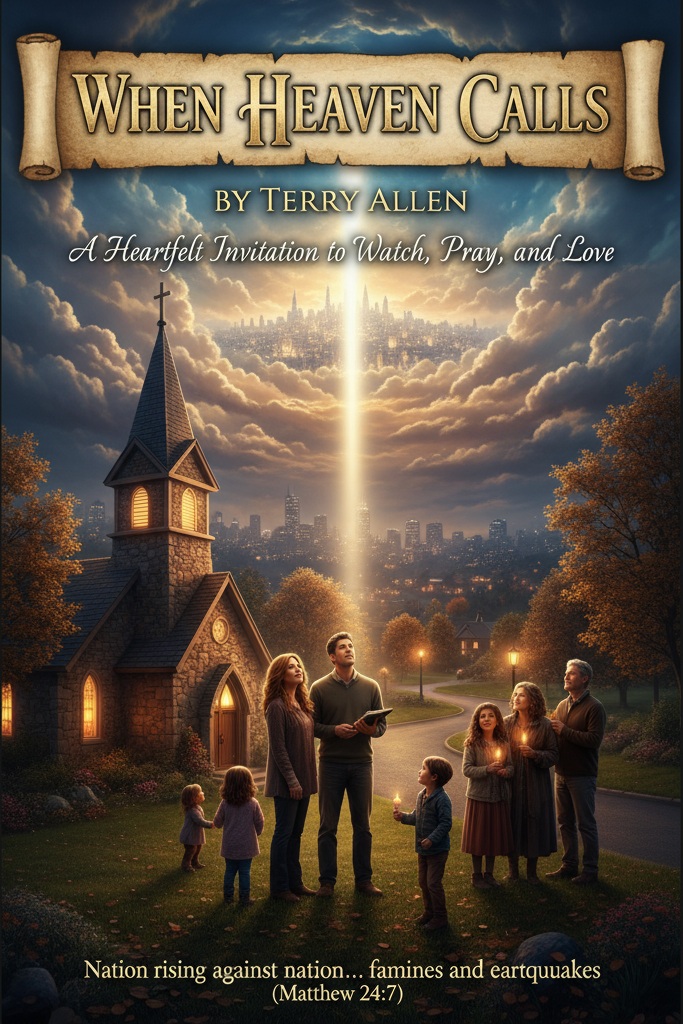
“I have,” Sarah replied, her smile soft yet resolute. “And I’ve also seen how we, as believers, are called to respond.” She paused beneath an oak tree, its budding leaves shimmering in the lamplight like flecks of gold. “Christians aren’t the architects of this peace, but Scripture tells us these moments are part of a larger tapestry. In Matthew 24:6–8, Jesus spoke of ‘nation rising against nation… famines and earthquakes’, birth pangs, not the end itself. The treaty may delay conflict, but it won’t stop the clock.”
Michael turned to her, his coat collar brushing against the stillness of the evening. “So, you see it as a temporary calm before the storm?” he asked, his voice low and contemplative.
“Exactly.” Sarah raised her cup in a gentle salute to the darkening sky. “And it’s an invitation. Peter reminds us to ‘gird up the loins of our mind’ and ‘be sober-minded’ so that our hope is fully set on the grace to be brought at the revelation of Jesus Christ (1 Peter 1:13). We prepare our hearts first, by faith, by prayer, by living love, so when the moment comes, we’re not scrambling for answers.”
As they continued their stroll, passing neatly trimmed hedges and doorsteps aglow with evening lamps, Michael’s steps slowed, allowing her words to resonate within him. “I’ve spent years dissecting every policy for hidden agendas,” he confessed. “But now, I wonder if I’ve overlooked the human element. This treaty impacts real lives: farmers in drought-stricken fields, refugees in border camps, families grappling with identity in a digital age.” He glanced at his coffee, finding solace in its modest warmth. “Scripture says in Isaiah 58:10, ‘if you pour yourself out for the hungry and satisfy the desire of the afflicted, then shall your light rise in the darkness.’ Are we ready to pour ourselves out?”
Sarah’s eyes sparkled with understanding. “That’s the heart of it. Prophecy points us forward; compassion draws us into the present. The ‘mark of the beast’ isn’t merely a barcode on a wrist, it’s the allegiance of the soul. Revelation 13:16–17 warns of a system that controls commerce, yes, but behind every control is a heart idol. The Lord calls us to offer our allegiance to Him first, to trade fear for faith, anxiety for action, isolation for community.”
At a graceful curve in the road, a bench beckoned them to sit, and they did so in comfortable silence, watching for fireflies to emerge and dance upon the air. Michael inhaled deeply, aware of the weight of their conversation. “I never anticipated that God would speak through treaties and trade agreements,” he confessed, vulnerability painting his words. “My grandmother used to whisper to me about the trumpet call, quoting 1 Corinthians 15:51–52: ‘We shall not all sleep, but we shall all be changed, in a moment, in the twinkling of an eye.’ It felt distantly poetic, but far off. Tonight, it feels closer.”
Sarah placed her hand gently over his. “It’s personal,” she said softly, her voice a soothing balm in the twilight. “He’s not indifferent to policies or power. Revelation 3:10 promises protection ‘from the hour of trial’ to those who keep His word and patiently endure. Endurance isn’t passive. It’s a steadfast march toward holiness, fueled by love.” She closed her eyes, inhaling the night air, then opened them to meet his gaze. “Michael, the treaty will usher in new policies, new challenges, perhaps even new persecutions. Our call is to stand firm in the armor of God (Ephesians 6:13–18), to protect truth, to minister to the hurting, to pray without ceasing (1 Thessalonians 5:17). That’s our readiness plan.”
He nodded, grasping the gravity of her words, contemplating his notebooks filled with outlines for a scathing exposé. They now required a different lens, one that embraced faith alongside facts. “What does faithful waiting look like?” he pondered aloud, almost to himself.
“Daily obedience,” Sarah replied, her voice unwavering. “Trimming our lamps with Scripture and prayer, like the wise virgins in Matthew 25:1–13. It means looking outward, feeding the hungry, welcoming the stranger, while keeping our eyes on the horizon of glory. It’s both the mundane and the magnificent, the midnight prayer and the global stage.”
Above them, a single star winked into existence, small yet radiant. Michael pointed, a smile gracing his lips. “I used to think that if there was a star to guide me, I’d simply have to follow it.” His smile turned wry. “But now I understand it’s not about the star itself. It’s about the One who placed it there.”
Sarah squeezed his hand gently. “Yes. He is both the guide and the goal.” She reached into her tote and retrieved a small tealight candle. “May I?”
He nodded, watching as she struck a match, igniting the wick. The flame flickered, then steadied, soft yet unwavering. “Let this light be our reminder,” Sarah prayed softly, “that we watch, we wait, and we love with steadfast hearts. Lord, grant us courage to stand in the trials to come, compassion to serve those who suffer, and faith that burns brighter than any darkness.”
Michael bowed his head in quiet agreement. The candle’s glow illuminated their faces; two pilgrims poised on the threshold of tomorrow. He lifted his cup in her direction. “To readiness.”
“To readiness,” she echoed, and they drank.
As they rose to continue their walk, the world beyond their circle of light continued its restless spin, newsfeeds updating, treaties unfolding, economies rebalancing. Yet Michael sensed a profound shift taking place within him. Prophetic timelines and policy debates no longer felt like distant academic exercises; they were threads intricately woven into the fabric of his own soul. He understood now that true preparedness for Christ’s return demanded more than headlines and analysis; it required a heart ignited by love, disciplined by prayer, and anchored firmly in the Word.
Under the canopy of streetlamps and stars, Sarah and Michael stepped forward together, their footsteps creating a new rhythm: one foot grounded in present service, the other stepping boldly into expectant hope. The treaty might promise a fragile peace, but their souls held a promise unshakeable: the soon return of their Bridegroom King. And as the candle’s glow faded behind them, they carried its flame into the night, determined to shine brightly until the dawn of the eternal morning.
Go to Chapter – introduction, 1, 2, 3, 4, 5, 6, 7, 8, 9, 10, 11, 12, 13, 14, 15, 16, 17, 18, 19, 20.