

Your cart is currently empty!

“When Heaven Calls” Part I: Ordinary Dawn Chapter 2
Go to Chapter – introduction, 1, 2, 3, 4, 5, 6, 7, 8, 9, 10, 11, 12, 13, 14, 15, 16, 17, 18, 19, 20.
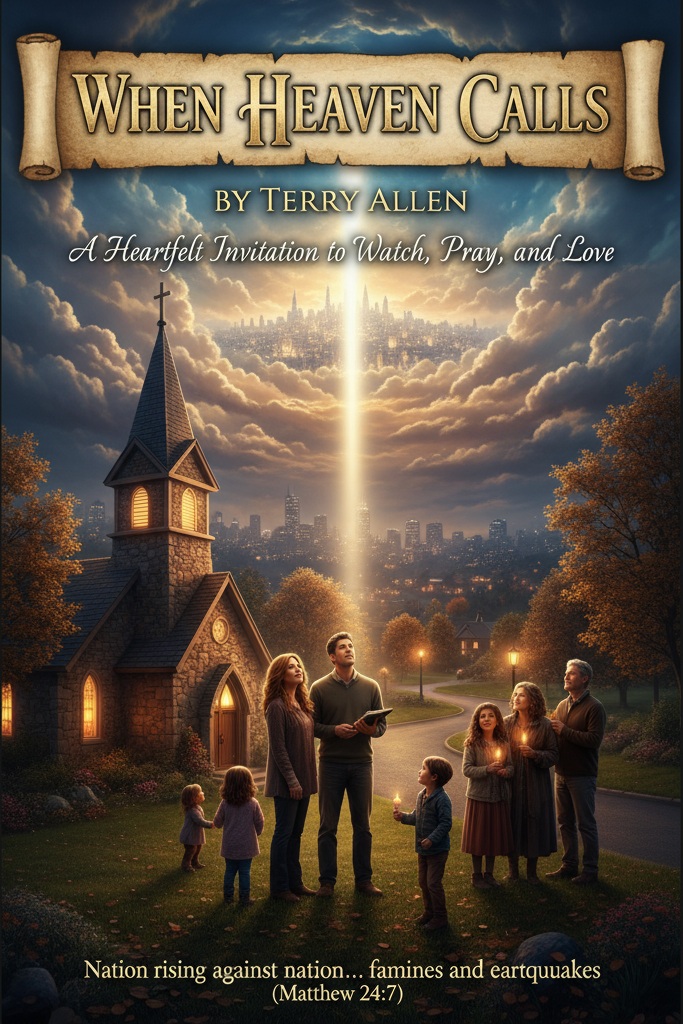
Chapter 2: A Flicker in the Night
Michael Turner’s loft was a canvas of duality, a reflection of the world outside. Towering windows framed the city’s vibrant pulse, a symphony of neon lights that danced in harmony with the night. However, the atmosphere was more subdued, illuminated only by the warm glow of a single lamp. The light pooled over an array of scattered notebooks, policy briefs, and half-drunk cups of coffee testament to the long hours spent in pursuit of truth. At his desk, a lone laptop radiated with urgency, its screen flickering with breaking news headlines: “UN Proposes Global Digital ID,” “World Leaders Sign Historic Climate Pact,” “Stop-and-Search Drones Deployed Nationwide.” Each headline was a thread in the intricate tapestry of human progress, yet Michael felt the weight of an ominous potential that lay beneath. As an investigative journalist, he had cherished facts over faith, logic over longing. Yet tonight, a stirring of ancient promises whispered to him, as if an unseen hand gracefully turned the pages of his very soul.
He opened a new document titled “Rapture Theology: Myth or Modern Prophecy?” The thought of such a topic ignited a spark of curiosity within him, tantalizing yet daunting. His grandmother’s gentle voice echoed in his mind, tender and resolute: “One day, you’ll believe, Michael. You’ll find peace.” He recalled her words, a soft prayer woven with the essence of 1 Thessalonians 4:13–18, a lifeline cast across the chasm of his skepticism. “We do not grieve as those without hope, for the Lord Himself will descend,” she had uttered, her eyes closed in unwavering faith. Tonight, he pondered whether he could treat those sacred words merely as copy or if, deep within, his pen would betray a heart already leaning toward belief.
With a sigh that carried the weight of contemplation, he organized his outline:
– Definition and history of Rapture theology.
– Scriptural foundations: 1 Thessalonians 4:13–18; 1 Corinthians 15:51–52; Revelation 3:10.
– Counterarguments: alternative eschatological views, theological objections.
– Modern context: biometrics, global governance, surveillance.
– Personal reflection: can one wait “with patience” (Romans 8:25) for what is unseen?
Despite his professional facade, Michael felt his heart quicken as he typed the introduction: “In an age of digital transparency, the idea of a sudden, invisible departure for believers seems… improbable.” His fingers hovered over the keys, a moment suspended in time. The soft glow of the lamp cast flickering shadows over a cherished photograph of his grandmother, a Bible resting in her hands, each page marked, every margin filled with her thoughts. He remembered her final words: “Even if you doubt, remember Hebrews 12:28, ‘let us offer to God acceptable worship, with reverence and awe.’” Worship as surrender, he mused. Could he truly remain an impartial observer in the face of such profound truths?
A news alert chimed, breaking his reverie. He clicked through to a wire story: “United Nations to Draft ‘Peace and Sustainability’ Compact, All Nations Invited.” The language was polished and diplomatic, “shared prosperity,” “environmental stewardship,” “digital identity for all.” Yet, the line between benevolent coordination and centralized control felt perilously thin. Michael’s notes began to blur with scriptural cross-references: Daniel 9:27’s covenant promising fragile peace; Revelation 13:16–17’s stark warning of a mark that binds commerce to allegiance. He underlined: “And he shall make a strong covenant with many for one week, and for half of the week he shall put an end to sacrifice and offering.” A shiver traversed his spine, a visceral reminder that beneath the veneer of progress lay a deeper narrative.
As dawn crept closer, the city’s hum faded into a gentle hush. Michael closed the article draft and opened his Bible to Matthew 24, reading Jesus’ words about “nation rising against nation… famines and earthquakes” (verses 7–8). Just days prior, an earthquake off the coast of Mexico had rattled thousands; news reports spoke of unprecedented storms ravaging Southeast Asia. Could these events be the “birth pangs” Christ described, “but the end is not yet” (v. 8)? His analytical mind raced, juxtaposing modern data against celestial signs. Yet in the quiet of his heart, a gentle urging beckoned him to move beyond mere correlation into personal conviction: “Therefore stay awake, for you do not know on what day your Lord is coming” (v. 42).
He turned to Revelation 3:10: “Because you have kept my word about patient endurance, I will keep you from the hour of trial.” The story of Laodicea loomed large in his thoughts; lukewarm faith was rebuked, yet here lay a promise of protection and perseverance. On this night, Michael’s skepticism felt tepid, neither fully cold nor ablaze. He recalled the candlelit Bible study he had attended at Sarah’s invitation the night before. Ten women had leaned in, Bibles open, their faces illuminated with expectancy as they traced the Parable of the Ten Virgins (Matthew 25:1–13). He had listened as Sarah taught, “Trim your lamps daily with prayer and Scripture. Keep watch, for light can flicker quickly.”
A soft knock at his door startled him from his reverie. His phone buzzed with a text from an unknown number: “Meet me in Room 714 at the UN Conference Center. Midnight. You’ll get the scoop.” The message vanished as swiftly as it appeared, leaving behind a mixture of excitement and apprehension. Room 714 could harbor the next story of a lifetime, perhaps even a revelation tying prophecy to policy. Setting his laptop aside, he whispered a prayer, earnest and low: “Lord, give me wisdom. James 1:5 reminds us that if anyone lacks wisdom, let him ask God, who gives generously. I seek discernment, truth to inform, faith to follow.”
After a moment of quiet reflection, he rose and walked to the window. The streetlights bowed beneath the early morning sky, and for a heartbeat, the world felt suspended between shadow and dawn. He closed his eyes, whispering Romans 8:25: “But if we hope for what we do not see, we wait for it with patience.” Was he truly waiting? Or merely observing from a distance, detached from the unfolding narrative? He opened his hand and touched the photograph of his grandmother, drawing strength from her legacy of unwavering hope.
As the clock edged toward midnight, Michael donned his attire for the evening: dark slacks, a crisp shirt, and a coat suited for early spring’s chill. In his pocket, his grandmother’s well-loved New Testament nestled beneath the article outline. He gathered his satchel, equipped with his laptop, recorder, and a small flashlight, bracing himself for inquiries that would span both journalistic and spiritual realms. What awaited him in Room 714? A leak of classified documents? A political maneuver among nations? Or perhaps a profound revelation that the world’s greatest hope and its gravest danger might spring from the same global covenant?
As he hailed a cab, Sarah’s parting words echoed in his mind: “Michael, the Lord’s return isn’t a conspiracy to fear but a promise to prepare by loving well.” She had referenced Isaiah 58:10: “If you pour yourself out for the hungry and satisfy the desire of the afflicted, then shall your light rise in the darkness,” encouraging him to look beyond the headlines and into the hearts of humanity. Even now, her words enveloped him, a gentle conviction that preparedness was not solely about recognizing signs but about responding with compassion.
The UN Conference Center loomed ahead, its facade illuminated against the night sky, the floodlights casting stark shapes on the pavement. Michael’s heart raced as he pressed the elevator button for the seventh floor. During the ascent, he whispered 1 John 4:18: “Perfect love casts out fear.” Perfect love, that was what he had seen reflected in Sarah’s eyes, in the prayers of families at Oakwood, in his grandmother’s unwavering faith. He realized that regardless of whether he uncovered political intrigue or prophetic fulfillment behind Room 714’s door, the ultimate question remained: Would his heart be ready to welcome the Bridegroom King?
The elevator chimed at Floor 7. Michael stepped into a hushed corridor lined with conference rooms, each numbered in orderly progression. He followed the soft glow emanating from Room 714. Outside its door, he paused, sensing the weight of eternity itself lingering on the threshold. With a deep breath, he pressed the latch and entered, allowing the world to shift once more.
Inside, a small group of delegates was gathered around a projector screen displaying the draft of the “Global Peace & Sustainability Pact.” Charts and clauses promised environmental safeguards, economic integration, and a universal digital identity. Familiar names floated through his mind, ambassadors he had interviewed, NGO directors whose press releases he had quoted. They spoke in measured tones of “shared stewardship” and “inclusivity.” Yet as he observed, Michael’s journalist instincts cross-referenced every word with the warnings of Revelation 13 and Daniel’s vision of a one-world authority.
Suddenly, a voice called his name. Sarah Reeves stepped into the doorway, her presence radiant even in the fluorescent light. In her hand, she held a well-worn Bible. “This is more than policy,” she said with a gentle conviction, “it’s a signpost.” She turned to Michael, her eyes locked onto his, and quoted Mark 13:37: “And what I say to you, I say to all: Keep awake.” In that instant, the lines between skeptic and believer blurred into a shared conviction: the hour was late, the bridegroom’s coming imminent, and their story, woven through news articles and ancient prophecy, was only just beginning.
As they stepped side by side into the meeting, Michael felt the weight of Scripture settle upon him like a mantle of light. Outside, the world continued to turn through the predawn hush. Within, two hearts beat in unison, poised at the intersection of history and eternity, ready to answer the call: “Even so, come, Lord Jesus” (Revelation 22:20).
Go to Chapter – introduction, 1, 2, 3, 4, 5, 6, 7, 8, 9, 10, 11, 12, 13, 14, 15, 16, 17, 18, 19, 20.